
 Practical trading resource
Position Size and Risk Calculator
The Forex position size and risk calculator is an indispensable tool in forex trading.
Trading calculation workspace
Enter your planning values to organise a clear risk estimate before placing a trade.
Planning estimate
About Position Size and Risk Calculator
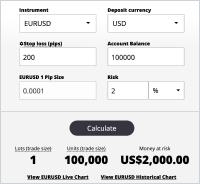
Use our Position Size and Risk Calculator (also known as a position/lot size calculator) to quickly calculate the recommended lot size for your trade, as well as the exact monetary amount at risk, based on live market quotes, your account balance, risk percentage, and stop loss in pips.
What is a Lot in Forex Trading?
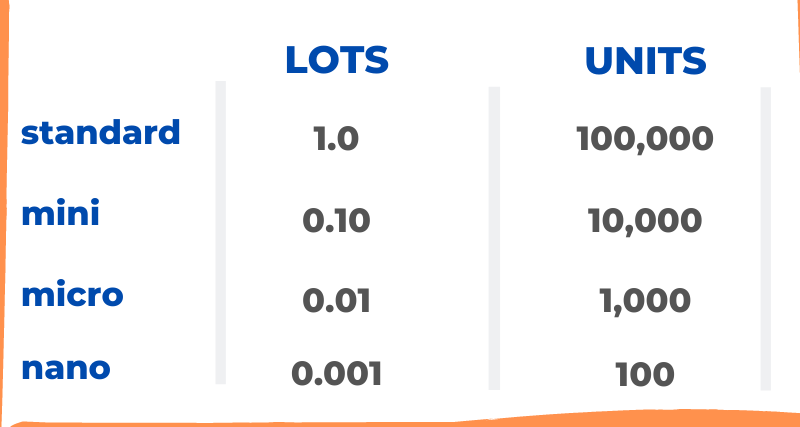
In forex trading, a "lot" defines the trade size, or the number of currency units bought or sold in a transaction. A standard lot typically equals 100,000 units of the base currency.
Most brokers also allow trading with fractional lot sizes down to 0.01 lots, or sometimes even smaller. Fractional lots are commonly categorized as Mini lots (0.10), Micro lots (0.01), and Nano lots (0.001). Refer to the diagram above to compare lot types with their corresponding currency units.
How to Use the Position Size and Risk Calculator
Instrument: Traders can select major forex currency pairs, select cryptocurrencies (such as BTC/USD, ETH/USD, LTC/USD, XLM/USD, and XRP/USD), and commodities (such as Gold, Silver, and Oil). In this example, we will use the USD/CAD currency pair.
Deposit Currency: Your account base currency affects pip value calculations and cross-rate conversions. In this example, we select USD as the deposit currency.
Stop Loss (Pips): Enter the maximum risk in pips you are willing to take on this trade. In this example, we use 100 pips as the stop loss.
Account Balance: Enter your account balance. In this example, we enter 2000.
Risk: You can choose either a risk percentage or a fixed amount (e.g., $2, $20, $40, etc.). As a standard risk management practice, many traders risk 1%–2% of their account equity per trade. In our example, we select 2% risk.
Now, click the "Calculate" button.
Results: The calculator uses real-time market rates and contract sizes to provide the recommended position size in lots, corresponding units, and the total money at risk.
In this case, with a 100-pip stop loss and a 2% account equity risk, the calculated recommended lot size would be 0.05 lots.
The calculator also displays the number of units represented by 0.05 lots (for example, 5,000 units) and the exact monetary amount at risk for this trade (for example, $40).
You may also find our Drawdown Calculator useful: it helps you estimate how your account equity could be impacted after a series of losing trades.
Position Size (Lot Size) Formula
The standard calculation formula is: Lot Size = Amount at Risk ÷ (Stop Loss in Pips × Pip Value).
Here, Amount at Risk is typically equal to Account Balance × Risk Percentage (e.g., $10,000 × 2% = $200); Pip Value varies depending on the instrument, contract size (units per lot), and account currency. The calculator on this page performs these conversions automatically.
Calculation Example
Example: Account balance of $10,000, risk set to 2% (=$200), stop loss at 50 pips. If the pip value for 1 standard lot of this instrument is approximately $10, then: Lot Size ≈ 200 ÷ (50 × 10) = 0.40 lots.
Data Source & Disclaimer
This tool uses real-time or near-real-time market prices for calculations; however, prices may experience delays. Calculation results are for informational purposes only and do not constitute investment advice or a guarantee of returns.
FAQ
What is the Position Size (Lot Size) Calculator used for?
It helps you determine the proper position/lot size before entering a trade. By entering your account balance, stop loss in pips, and risk per trade (as a percentage or fixed amount), it calculates the recommended lot size, corresponding units, and the exact money at risk for effective risk management.
What is the basic formula behind the calculator?
The core formula is: Lot Size = Amount at Risk ÷ (Stop Loss in Pips × Pip Value). The amount at risk can be a fixed currency amount you enter or calculated via Account Balance × Risk Percentage; the pip value fluctuates based on the instrument, contract size, and account deposit currency.
What is the difference between pips/points and pip value?
Pips/Points are units of measurement for price movements, while pip value represents the monetary profit or loss calculated based on your lot size for every 1-pip movement in price. Pip value varies depending on the lot size, instrument, contract size, and account currency. Therefore, even with the same 50-pip stop loss, the risk amount may differ across different instruments or account currencies.
How many units equal 1 standard lot? How are mini, micro, and nano lots calculated?
In forex trading, the standard default is: 1 Standard Lot = 100,000 units of the base currency. Therefore:
0.10 Mini Lot ≈ 10,000 Units
0.01 Micro Lot ≈ 1,000 Units
0.001 Nano Lot ≈ 100 Units
Is it better to select "Percentage" or "Fixed Amount" for risk input?
Both methods are essentially equivalent: Risk Amount = Account Balance × Risk Percentage. If you want to maintain consistent long-term risk management, using a percentage is generally more intuitive. If you prefer to strictly limit the maximum monetary loss per trade, using a fixed amount is more convenient. You can switch between them based on your trading preferences.
Why might the calculator results differ from the margin or profit/loss displayed on the trading platform?
Common reasons include:
Price feeds may have delays, or the platform might use different liquidity sources (spreads and slippage can also affect execution)
Broker contract specifications (units per lot) or decimal digits (pip precision) may vary
Account currency conversions, swaps/overnight fees, or commissions are not included in this estimation
How should I enter the stop loss distance? Should I use pips or points?
Here, you enter your planned stop loss distance (the price difference in pips/points between the entry price and the stop loss price). Different instruments or platforms may display pips or points, but both essentially measure price movement. If you are unsure of the unit, we recommend entering the stop loss value shown on your trading platform first, then checking whether the calculated risk amount aligns with your expectations.
Which instruments does this calculator support? Can it be used for Forex, Gold, Oil, and Cryptocurrencies?
It is generally suitable for major forex currency pairs and may also support select precious metals, energy commodities, and cryptocurrencies (depending on the instruments available in the tool list). Contract specifications and pip values vary significantly across different assets. Using this calculator helps you clearly convert your stop loss distance into a monetary risk amount and recommended lot size.
How will the recommended lot size change if I set a very small or very large stop loss?
Assuming a fixed risk amount: a tighter stop loss generally allows a larger lot size, whereas a wider stop loss results in a smaller recommended lot size. This is because the same risk budget is distributed across potential losses per point. To avoid miscalculations from extreme values, always double-check whether the calculated "Money at Risk" matches your risk limit.
Can the results from this calculator be directly used as trade execution advice?
The calculated results serve as a reference for estimating risk and position sizing and do not constitute financial advice. Actual trading may be affected by spreads, slippage, commissions, minimum order sizes, and margin requirements. Before placing an order, always double-check the lot size, required margin, and stop loss settings directly on your trading platform.
Related trading tools
Explore more resources for risk, margin and trade planning.
Forex Spread Calculator
The Forex Spread Calculator is an essential tool for forex traders, helping you accurately calculate spreads across different currency pairs.
Use this tool
Position Size and Risk Calculator
The Forex position size and risk calculator is an indispensable tool in forex trading.
Use this tool
Forex Cashback Calculator
Forex cashback and rebate calculators are essential tools for forex traders, helping you maximize your trading profits.
Use this tool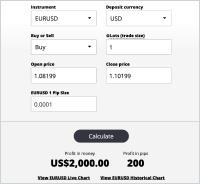
Forex Profit Calculator
The Profit and Cashback Calculator is a powerful tool for forex traders, helping you accurately calculate potential profits and cashback for your trades.
Use this tool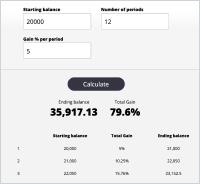
Forex Compounding Calculator
The Forex Compounding Calculator is an essential tool for forex traders, helping you project and calculate the impact of compounding on your trading account.
Use this tool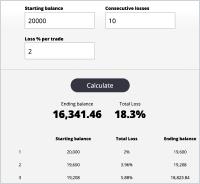
Drawdown Calculator
Use our Forex Drawdown Calculator to accurately calculate how a series of losing trades impacts your trading account balance.
Use this tool