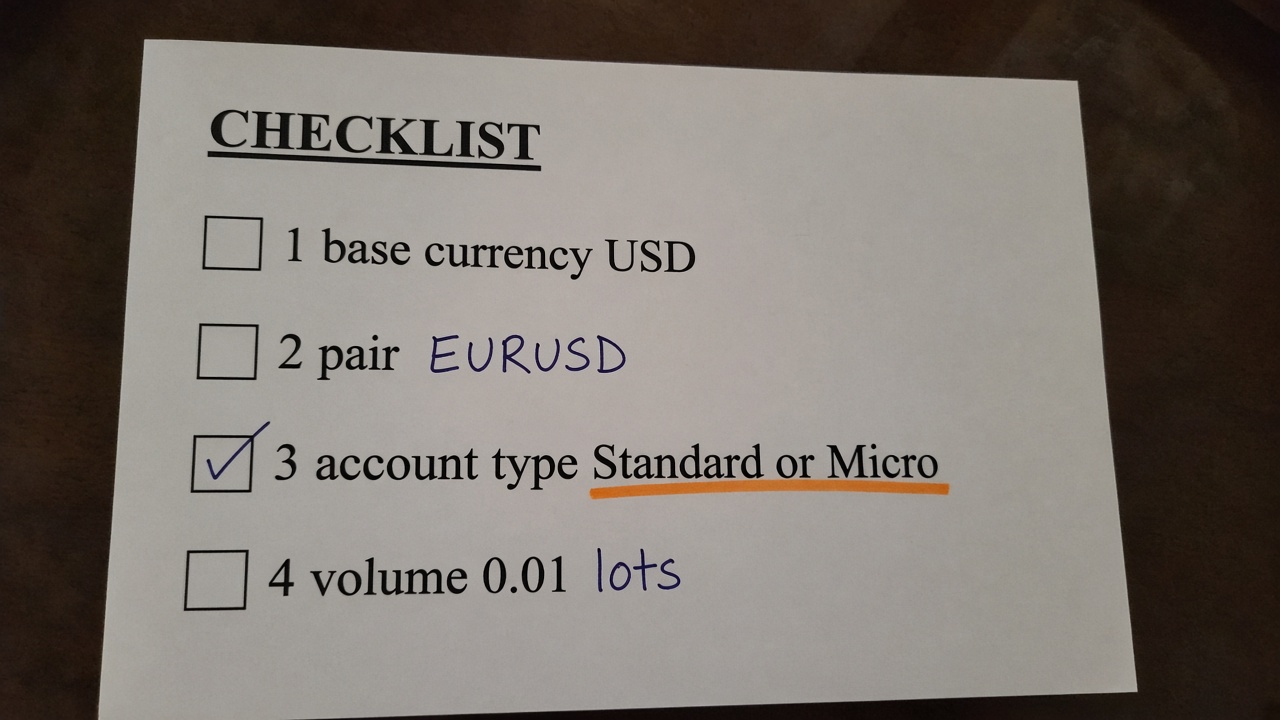
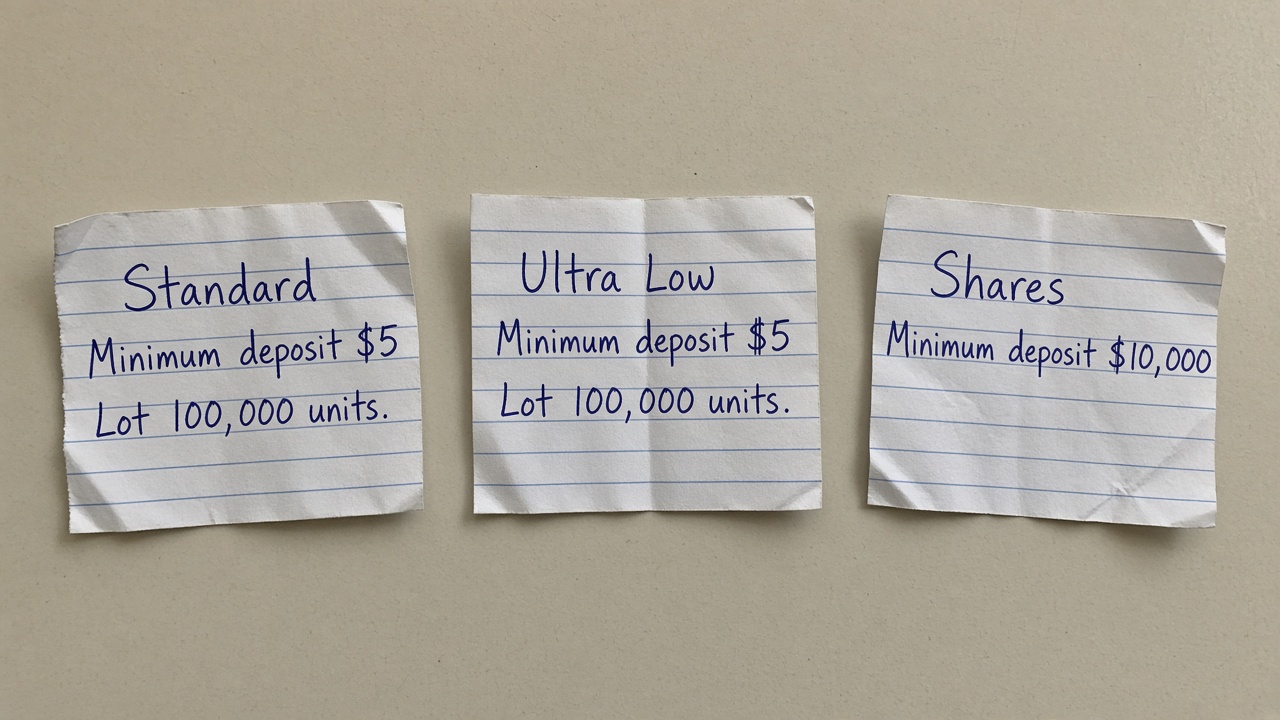
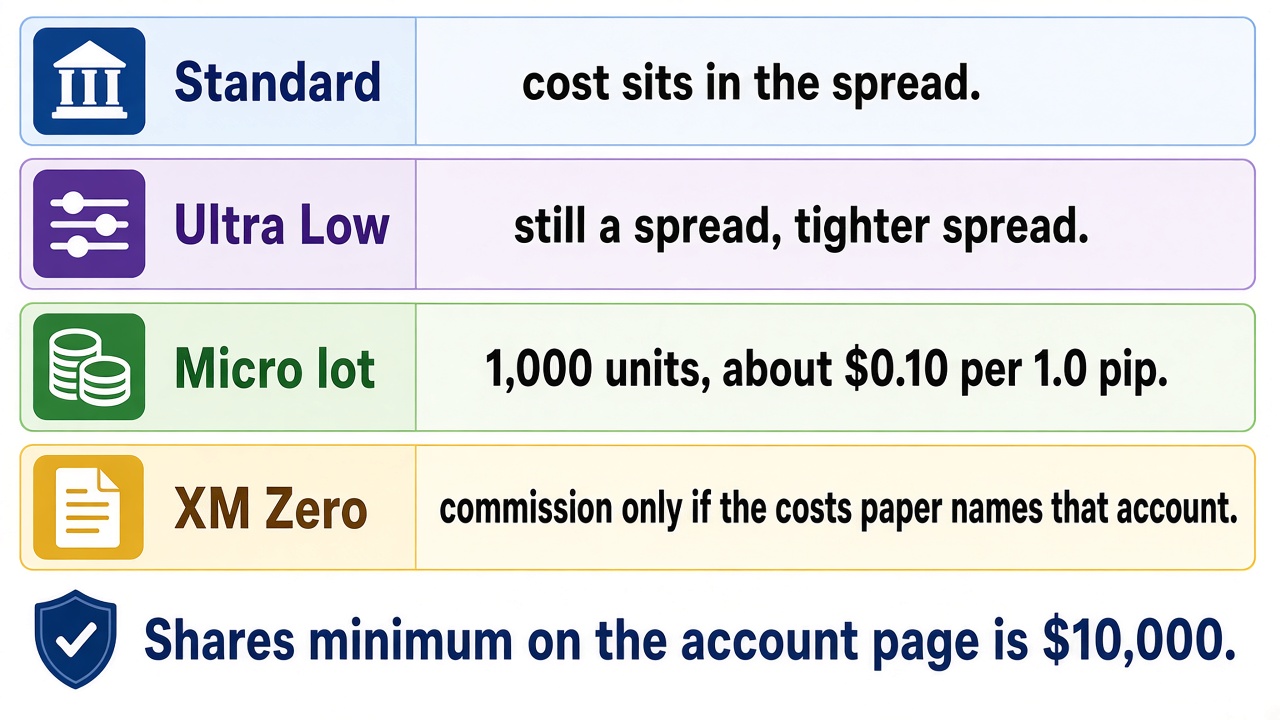
XM account types on the current account types page are three plans: Standard and Ultra Low, each with a stated minimum deposit of $5, and Shares, with a stated minimum deposit of $10,000. Standard and Ultra Low use the same 100,000-unit forex lot unless you open the micro version, which XM’s affiliate definitions set at 1,000 units. The difference that changes a forex ticket is where the cost sits and how wide the spread is, not a second leverage number printed on a rebate card. A Cyprus costs paper also names XM Zero, with a commission, and that name is not on the account page above. The menu attached to your client agreement is the list that applies.
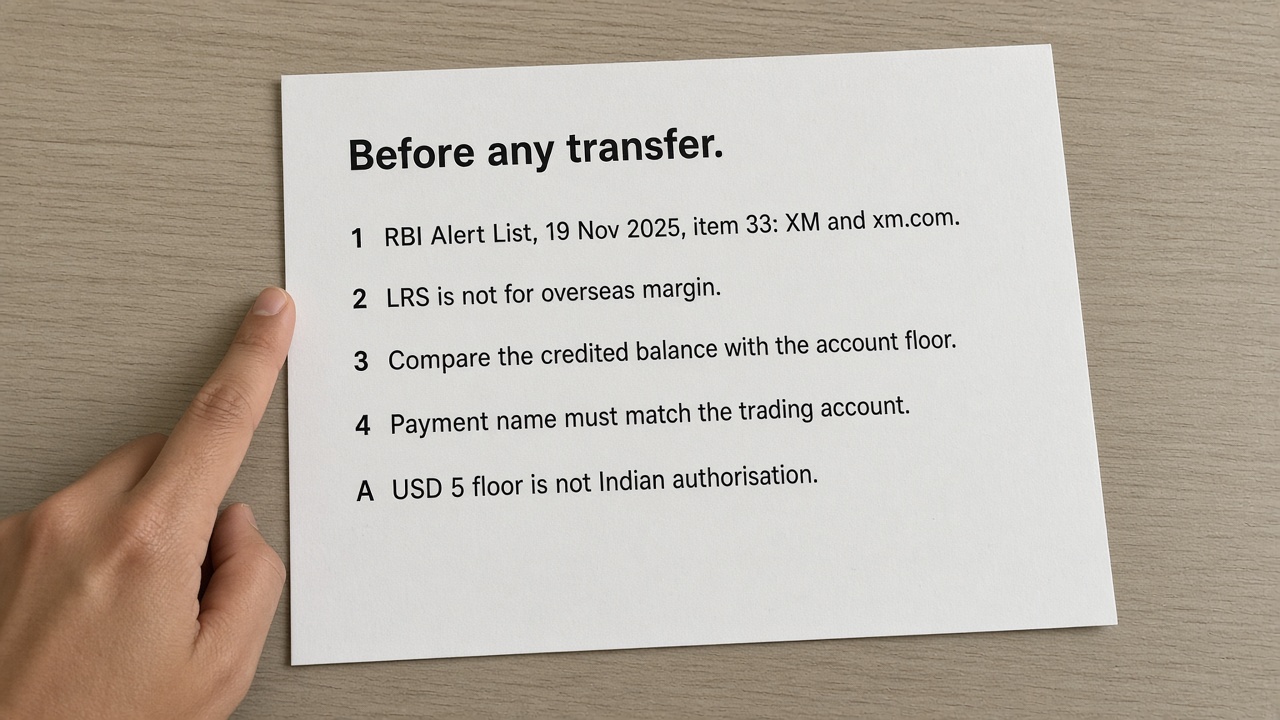
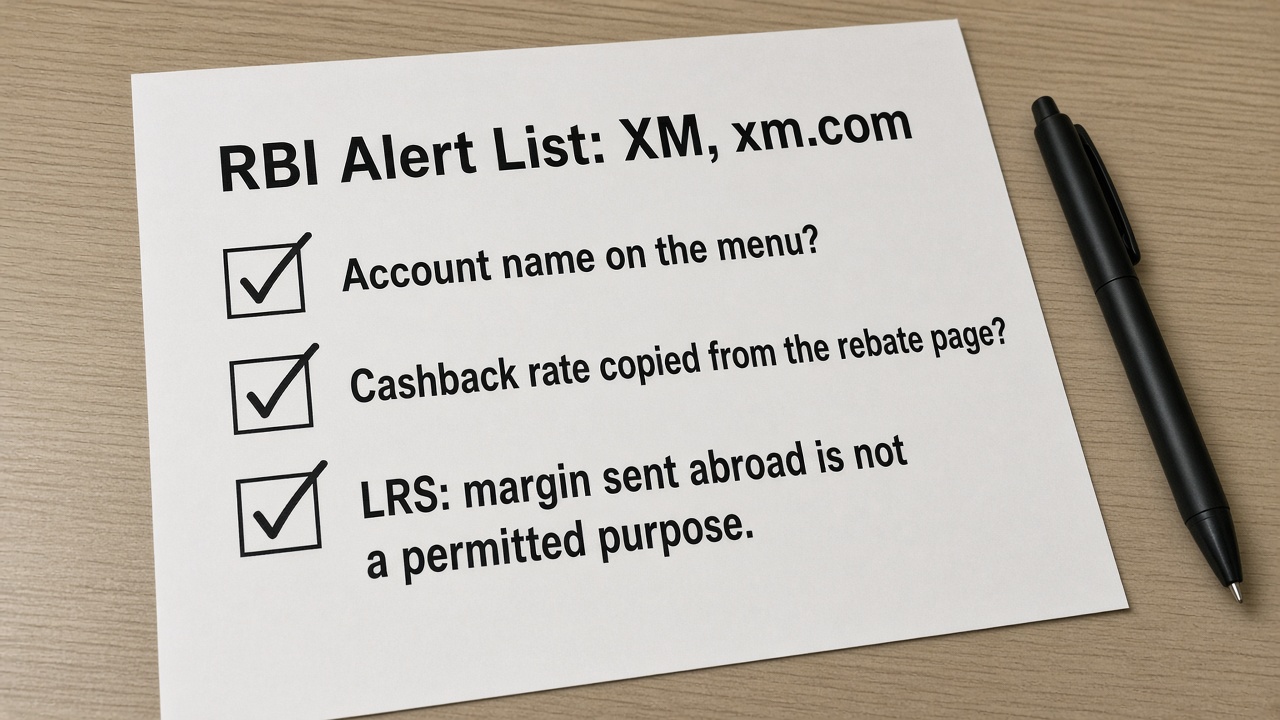
For a reader in India, the account name is the second question. The Reserve Bank of India’s Alert List includes XM and xm.com. That list covers names that are not authorised to deal in forex under FEMA and not authorised to run a forex electronic trading platform. Choosing Ultra Low does not take a name off that list. Leveraged forex and CFDs can lose the money you deposit. The comparison below is a way to read the menu, not a recommendation to open an account.
XM account types change the contract size and the cost line
A brand can show several companies on different agreements. Trading Point of Financial Instruments Ltd (CySEC 120/10) is the company on the Cyprus costs paper. XM’s regulation page names XM Global Limited under the Belize Financial Services Commission, licence 8557558. Other group companies exist. The account nicknames below are not a promise that every company offers every nickname, and a leverage figure on a screening card is not the cap on your agreement.
| Name | What the public page or contract definition says | What to read before you use it |
|---|---|---|
| Standard | Minimum deposit $5 on the account types page. The blurb talks about bonuses. Forex lot in the affiliate definitions: 100,000 units. | The live spread on your symbol. Bonus rules, if any, are a separate document and are not available in every country. |
| Ultra Low | Minimum deposit $5. The blurb says low spreads and lower swap fees and commissions. Same 100,000-unit standard lot. | The spread on that account’s symbol, not a “from” number copied from a review. The Cyprus costs paper does not put the Zero commission on this name. |
| Micro and Ultra Low Micro | Affiliate definitions: 1,000 units of base currency per forex round lot. | A 1.0 pip move is about one-hundredth of the same move on a 100,000-unit lot. The spread in pips can still match the larger account. |
| Shares | Minimum deposit $10,000 on the account types page. | Whether the menu is offering share CFDs inside a forex account or this separate Shares plan. The $5 plans are not this product. |
| XM Zero | Named in the Cyprus costs paper. Commission USD 7 per USD 100,000 of transaction size. | Only if the agreement is that company and the account you opened is Zero. Do not paste the $7 line onto Standard or Ultra Low. |
The account types page also says that all accounts on that page offer negative balance protection, hedging and an Islamic option as standard, and that a deposit in another currency is shown as the equivalent of the dollar figure. Those sentences are the page’s wording. The agreement you sign is the copy that binds that company. How to match the company, the live spread and the rebate rule is set out in how to check the account, the spread and rebate eligibility.
Standard versus Ultra Low is a spread choice, then a lot-size choice
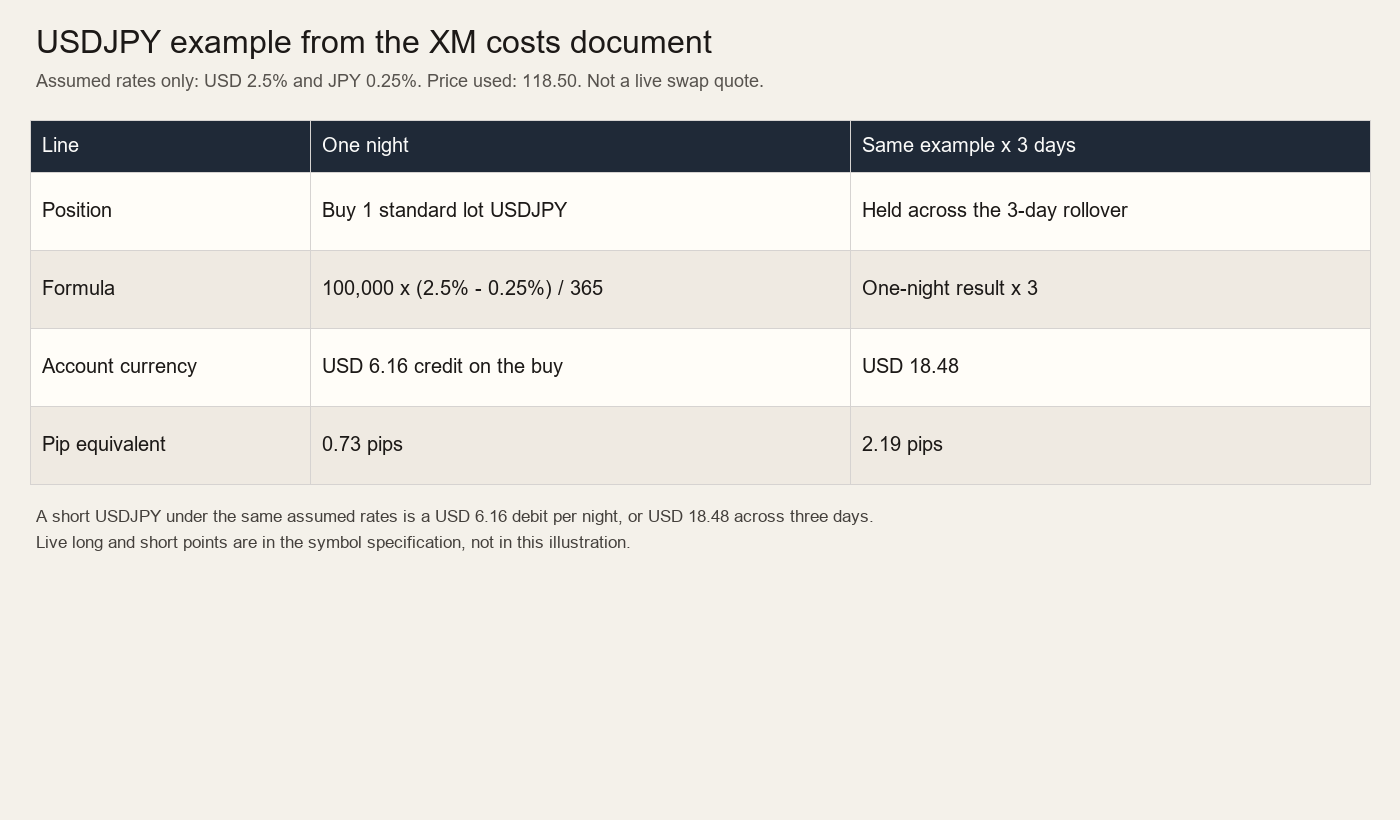
On both names, a forex position’s visible dealing cost is the spread: the gap between the buy price and the sell price. The account types page points Standard readers at bonuses and Ultra Low readers at low spreads. It does not publish one EURUSD average that you can treat as today’s price. Reviews quote different “from” figures for the same pair. Use the symbol specification in the account you actually open, and the method in how XM spreads should be checked. Overnight financing is a separate line; swap fees do not disappear because the account is called Ultra Low.
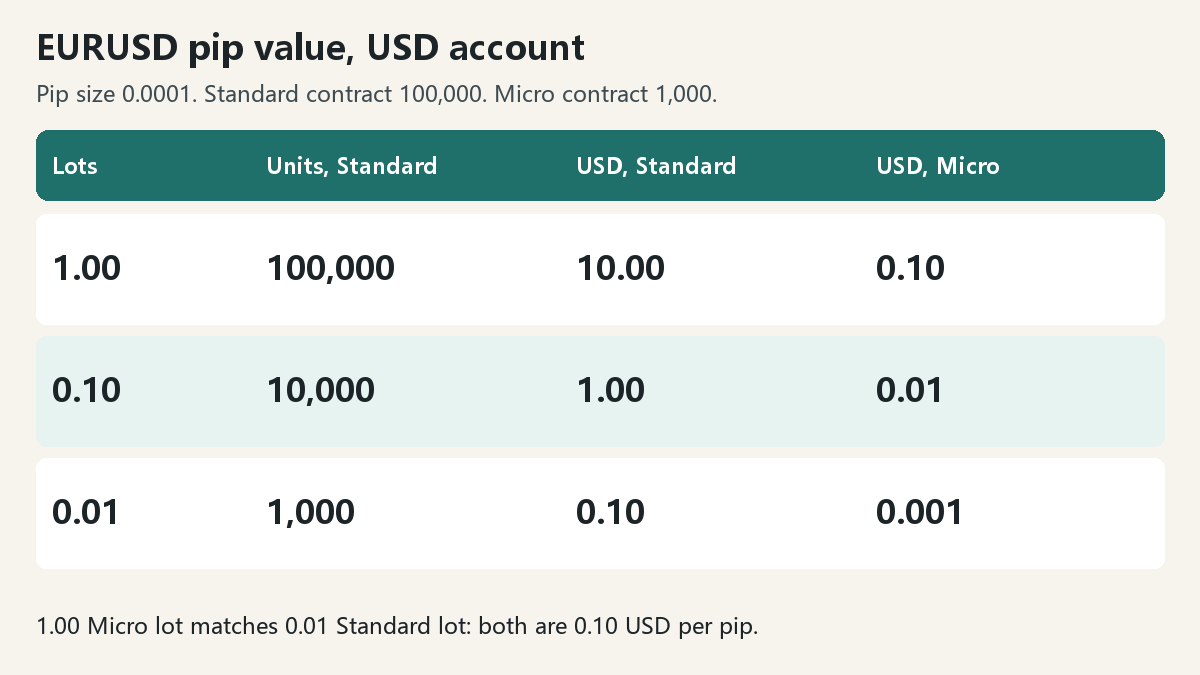
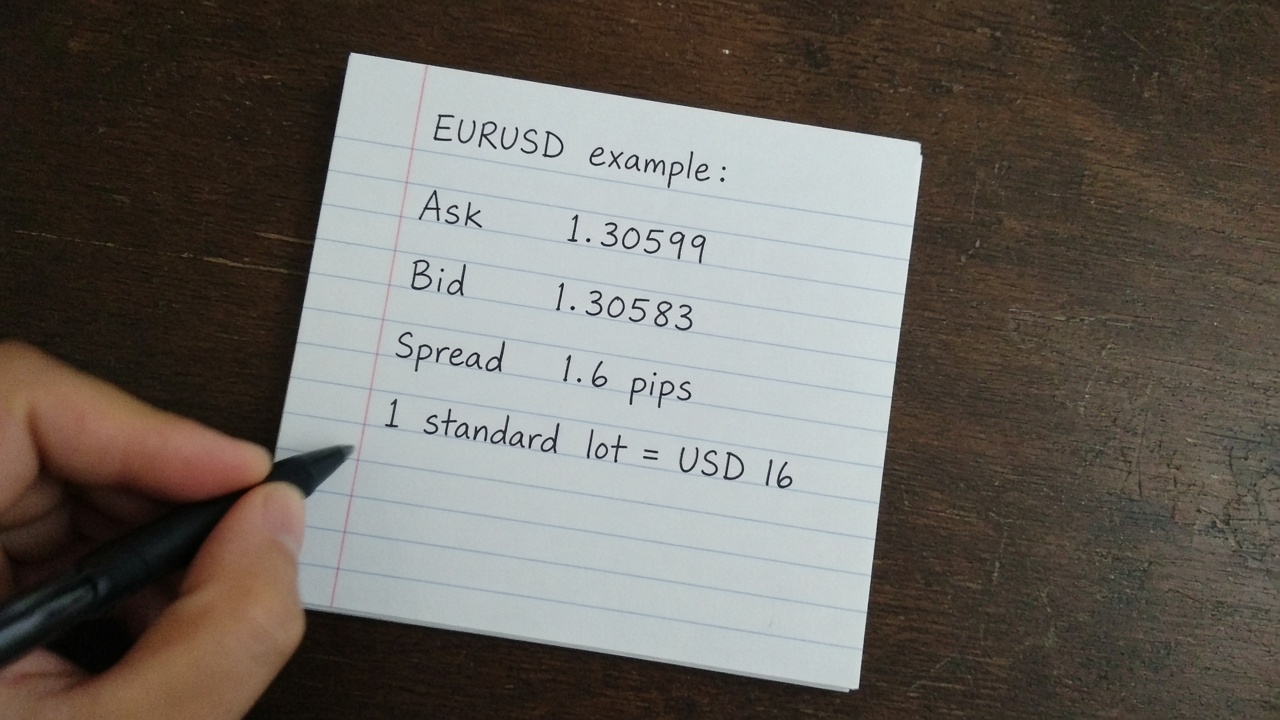
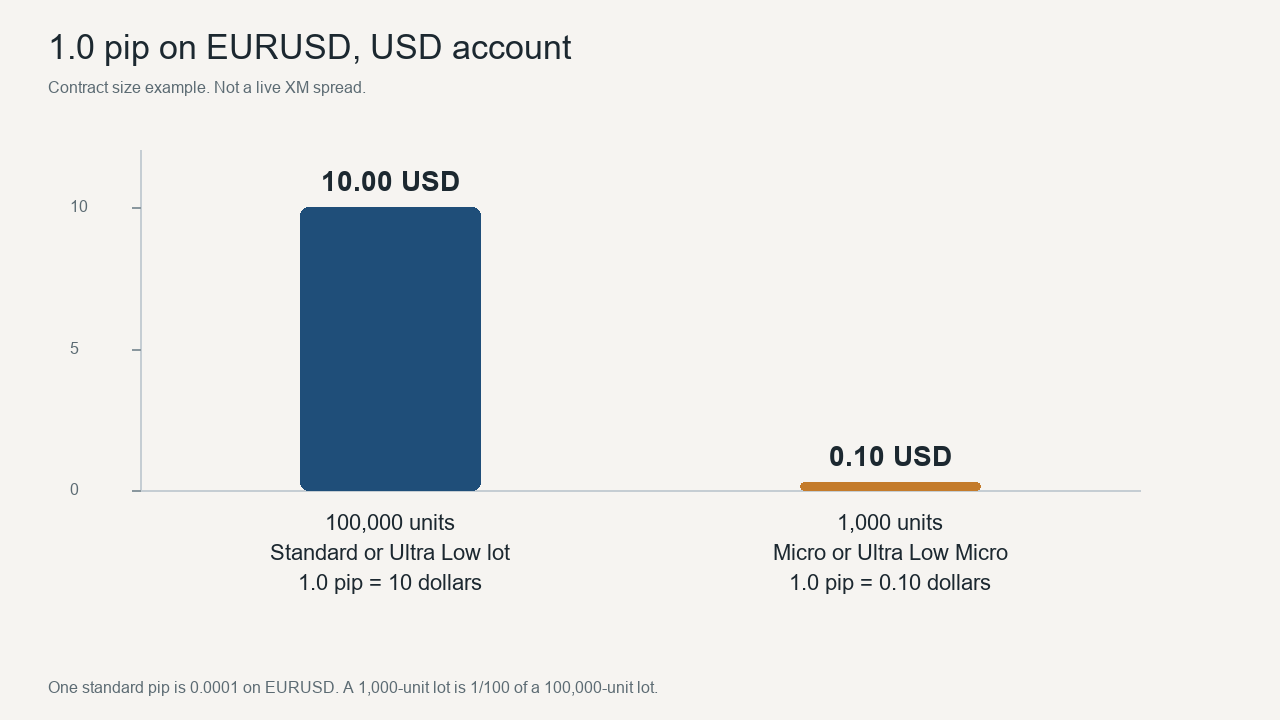
The lot size is the part that is fixed in the definitions. XM’s affiliation agreement sets a standard forex round lot, and an XM Zero or Ultra Low standard round lot, at 100,000 units of the base currency. A micro or Ultra Low micro round lot is 1,000 units. On EURUSD in a US-dollar account, one standard pip (0.0001) is about $10 on the 100,000-unit lot and about $0.10 on the 1,000-unit lot. That arithmetic is the contract size. It is not the spread you will be quoted.
| Contract | Units of base currency | About $ per 1.0 pip on EURUSD |
|---|---|---|
| Standard or Ultra Low standard lot | 100,000 | 10 |
| Micro or Ultra Low Micro lot | 1,000 | 0.10 |
A micro account does not make the spread, in pips, smaller. It makes each pip worth less, so the same quoted spread costs less in dollars and each price move also pays or loses less. If you need a position smaller than the minimum on the 100,000-unit account, the micro contract is the relevant option. If you need the tighter quoted spread and you can size the 100,000-unit lot, Ultra Low is the plan the account page is describing. Convert the pip with the pip calculator when the pair or the account currency is not this example. Margin still depends on leverage and price; use the margin calculator with the leverage on your agreement, not a card that says 1000:1 for every client.
The $5 minimum is the figure on the account types page for Standard and Ultra Low. A payment method can ask for more than $5, and a non-dollar deposit is converted to the equivalent. The deposit floor is discussed further in XM’s minimum deposit. Opening one plan does not rewrite another: if you want both a micro contract and an Ultra Low quote, open the account whose symbol list shows that combination and read the specification before the first ticket.
Shares and XM Zero are not smaller versions of Ultra Low
Shares is the plan with the $10,000 minimum on the account types page. It is not a forex account with a tighter spread. A forex or metals ticket on Standard or Ultra Low does not become a share holding because the broker also lists a Shares plan. If the product you want is a stock CFD inside a regular account, that is a symbol on that account, with that account’s charges, not an automatic seat in the $10,000 plan.
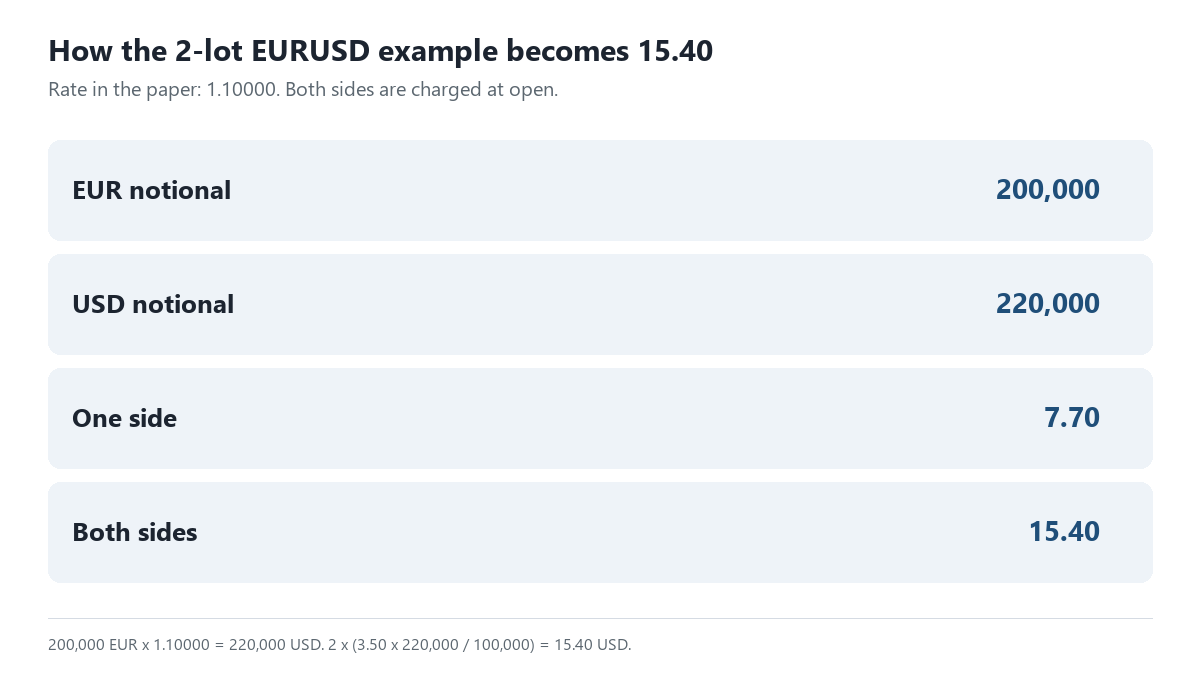
XM Zero shows up in a different document. The costs and charges paper for Trading Point of Financial Instruments Ltd says the commission fee is charged on XM Zero accounts only, at USD 7 for a USD 100,000 transaction, taken as USD 3.50 when the position opens and USD 3.50 when it closes, with both amounts deducted at the open. A one-lot USD-based position at a notional of about $100,000 is therefore $7 in that paper’s own terms. The same section does not assign this commission to Standard, Ultra Low or Shares. Whether XM charges commission walks through those examples. If your agreement names another company, stop and use that company’s table.
Cashback changes a line of cost after the account is chosen
Cashback, teaching and account opening on this site follow the rate and the rules on the XM rebate page. Put that rate into the rebate calculator only after you know the unit: dollars per standard lot, pips, or a share of commission. A micro lot is one-hundredth of a 100,000-unit lot, so a per-standard-lot rate has to be scaled. A rate written for XM Zero’s commission does not apply to a Standard account that has no such commission.
The affiliation agreement excludes trades that stay open for less than five minutes from the affiliate’s commission. If the cashback you are reading is paid out of that commission, those short trades may not count. The rebate page is the place to confirm the holding-time rule, the symbols and the settlement cycle. Cashback does not change the company on the agreement, the stop-out level or the RBI list. It is not a reason to prefer Ultra Low over Standard, and it is not a substitute for the spread.
In India, settle the permission question before the account name
RBI’s Alert List, on the page linked above, names XM and xm.com. The 19 November 2025 press release updated that list. XM was already on the published list; the release itself added seven other names. RBI says the list is not exhaustive, and a name that is missing is not therefore authorised. Residents are expected to use authorised persons for permitted forex purposes. Remittances to send margin to an overseas exchange or counterparty are not a permitted Liberalised Remittance Scheme purpose. A longer pass through those points is in how Indian residents should verify a forex platform before using XM.
None of Standard, Ultra Low, Micro, Shares or Zero changes that screen. If the menu will not offer the plan, or the agreement’s company is not the one whose costs you just read, stop and re-read the agreement. Do not fill the gap with the maximum leverage printed on a broker profile.
FAQ
What are the XM account types on the current account page?
The account types page names Standard and Ultra Low, each with a $5 minimum deposit, and Shares, with a $10,000 minimum deposit. Micro and Ultra Low Micro are smaller lot sizes, 1,000 units rather than 100,000, in XM’s affiliate definitions. XM Zero appears in a Cyprus costs paper and is not one of the three names on that account page.
How is Ultra Low different from Standard?
Both use a 100,000-unit forex lot unless you choose the micro version, and both show a $5 minimum on the account page. The page aims Standard at readers who want the bonus wording and Ultra Low at readers who want a lower spread. It does not publish one EURUSD spread you can lock in. Compare the symbol specification on each account, and keep swap as its own line.
Does a micro account have a tighter spread?
The micro label changes the contract size to 1,000 units. One standard pip on EURUSD is then about $0.10 instead of about $10. The spread in pips can still be the Standard spread or the Ultra Low spread, depending on which micro plan you opened. Smaller pip value means smaller dollar gains and smaller dollar losses.
Do Standard and Ultra Low charge the $7 commission?
The Cyprus costs paper charges that commission on XM Zero only: USD 7 per USD 100,000, taken as USD 3.50 at open and USD 3.50 at close, both deducted when the trade opens. The same section does not put the fee on Standard, Ultra Low or Shares. If your agreement names a different company, use that company’s schedule.
Who is the Shares account for?
It is the plan with the $10,000 minimum on the account types page. It is not a cheaper forex account. A stock CFD symbol inside Standard or Ultra Low is still that account’s product. Read the specification for the symbol you were offered before treating it as the Shares plan.
Can I switch from Standard to Ultra Low inside the same account?
Treat them as separate accounts. Open the plan whose symbol list matches the contract you want, then read that symbol’s specification. Do not assume a setting inside one login rewrites a 100,000-unit contract into a 1,000-unit contract or replaces one spread stream with another.
Is the $5 minimum the amount every payment method will accept?
The account types page states $5 for Standard and Ultra Low, and it says a non-USD deposit is shown as the equivalent. A card, wallet or bank method can set a higher floor. Shares stays at the $10,000 figure on that page. Check the deposit screen for the account you are funding.
Does every XM account include negative balance protection?
The account types page says all accounts on that page offer negative balance protection, hedging and an Islamic option as standard. That is the page’s statement. The client agreement of the company you sign is the wording that applies to you, and a retail rule at an EU firm is not automatically the rule on another group company.
Will cashback be the same on Standard and Ultra Low?
Only if the rebate page uses the same unit for both. A rate per standard lot has to be divided by 100 on a 1,000-unit lot. A rate that is a percentage of XM Zero’s commission has nothing to multiply on an account that does not charge that commission. Trades open for under five minutes are left out of the affiliate commission in XM’s affiliation agreement, so they may produce no cashback if your rule follows that commission.
Does an Indian resident get a different XM account type?
The account menu does not create a special India plan that removes the regulatory problem. RBI’s Alert List names XM and xm.com. Residents are expected to deal in forex with authorised persons for permitted purposes, and LRS does not allow remittances to post margin with an overseas counterparty. Read the India verification page before comparing spreads.
Should I trust a card that lists 1000:1 leverage for every XM account?
No. Leverage follows the company on the agreement and the client category. A retail client of an EU firm is under a different cap from a figure printed as a global maximum. Use the leverage in your own account specification when you calculate margin.
Which plan fits a first small position?
If the goal is a small dollar risk per pip, the 1,000-unit micro contract is the size that does that. If the goal is the lower quoted spread and the 100,000-unit lot is affordable, Ultra Low is the plan described for that. Shares, at $10,000 on the account page, is a different product. None of these choices changes the India permission check.
Are bonuses part of the Ultra Low cost?
The account types page attaches bonus wording to Standard, not to the Ultra Low blurb. A bonus is not a spread, and it is often limited by country and by the promotion terms. Do not subtract a bonus from Ultra Low’s spread unless the promotion you were given names that account. Cashback and a deposit bonus are different credits.
What should I compare on two live accounts?
Use one symbol, one direction, one lot size and one holding period. Record the spread in pips, any commission, and the swap if the trade stays open past the rollover. Then apply only the cashback unit that the rebate page assigns to that account. If the company names on the two agreements differ, you are no longer comparing account types. You are comparing two contracts.