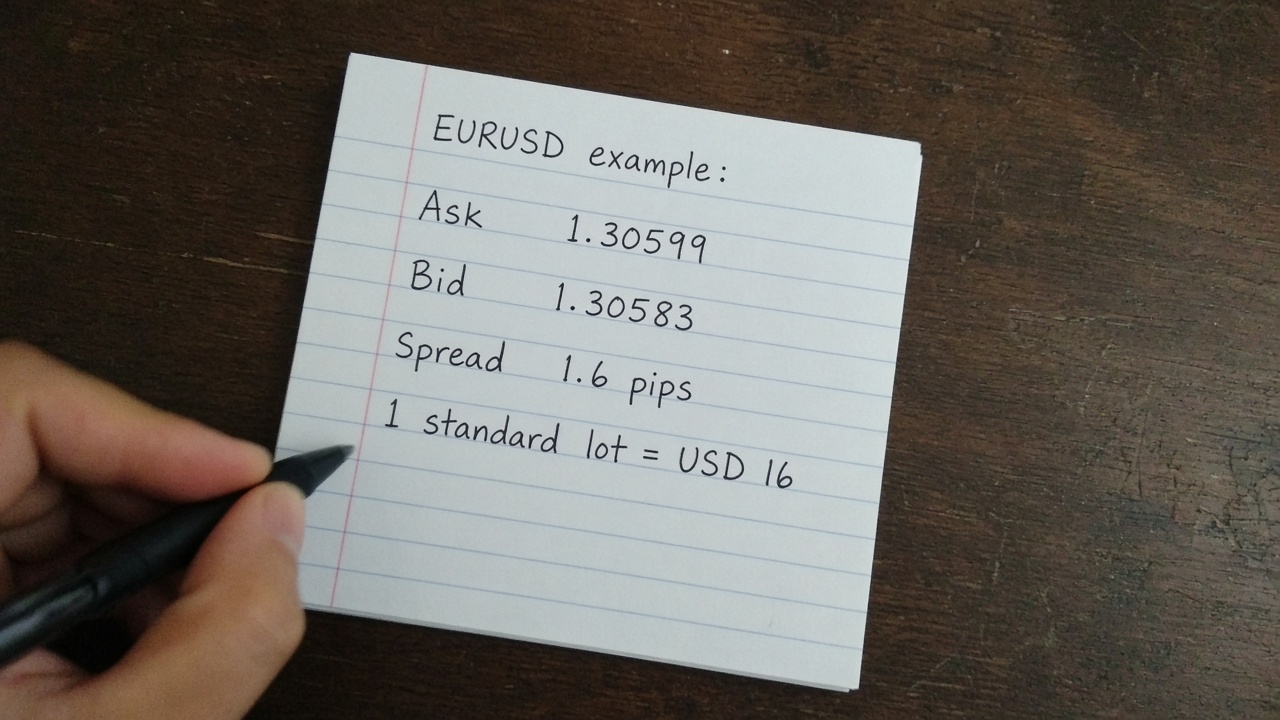
An XM spread is the gap between the buy price and the sell price on the symbol you actually trade. The cash cost of that gap is the pip difference times the contract size. In the costs paper for Trading Point of Financial Instruments Ltd, a worked EURUSD example uses ask 1.30599 and bid 1.30583, a spread of 1.6 pips, and prices one standard lot at USD 16. A column that says "as low as" is a floor, not the price on your ticket.
Forex and CFD trading can lose the money you put in. The figures below show how to read a cost, not whether a trade will make money, and not whether a resident of India may use the account. Company, account name, and symbol all change the number.
xmforexcashback.in is an information and rebate-research site. The account, the quote, and any complaint sit with the company named on the client agreement. The XM profile card is a screening sheet. Its founding year, leverage line, and licence list are not this spread calculation.
How to check the real XM spread
Start with the company on the agreement, then open that company's forex conditions. Two public documents do not describe the same firm.
The costs and charges paper is issued by Trading Point of Financial Instruments Ltd, company number HE 251334, CySEC licence 120/10, at Richardou & Verengarias 12, Araouzos Castle Court, 3rd Floor, P.C. 3042, Limassol. It defines spread as the difference between the buy price and the sell price, and it says XM uses variable spreads, not fixed ones. Spreads tend to be narrower in normal conditions and can widen around important news, political uncertainty, unexpected volatility, the close of the business day, and weekends, when liquidity is thinner.
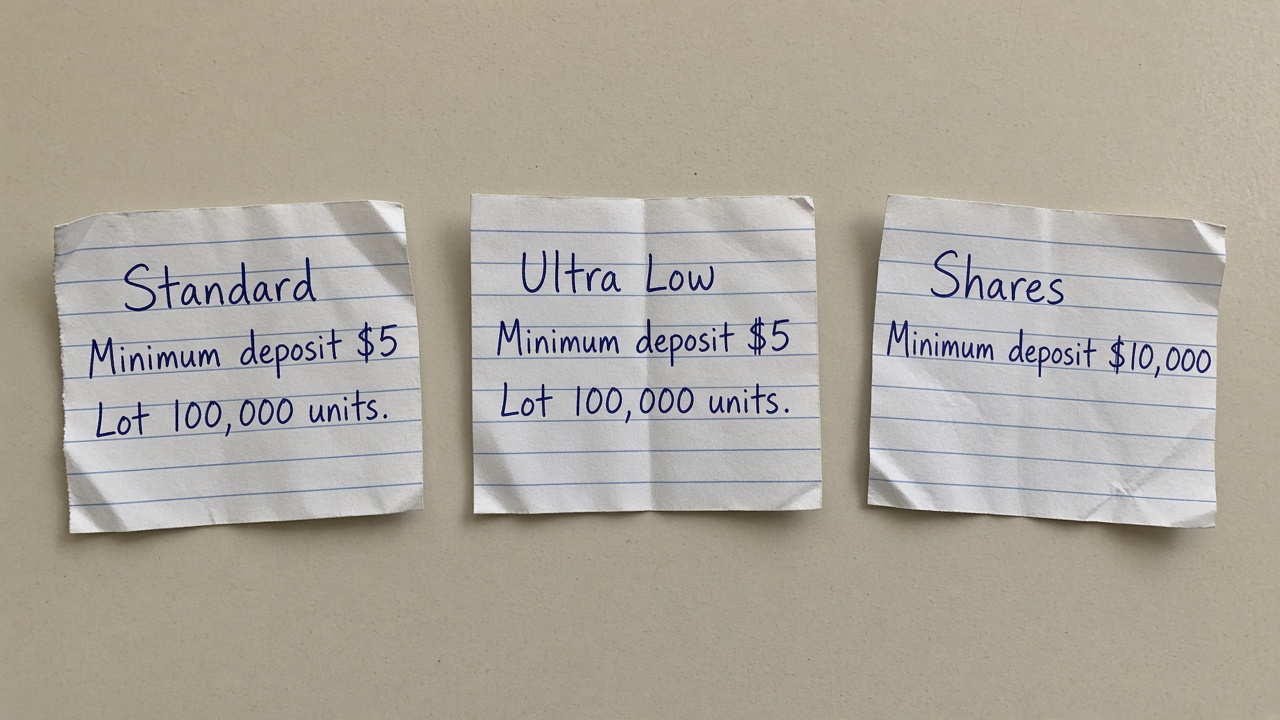
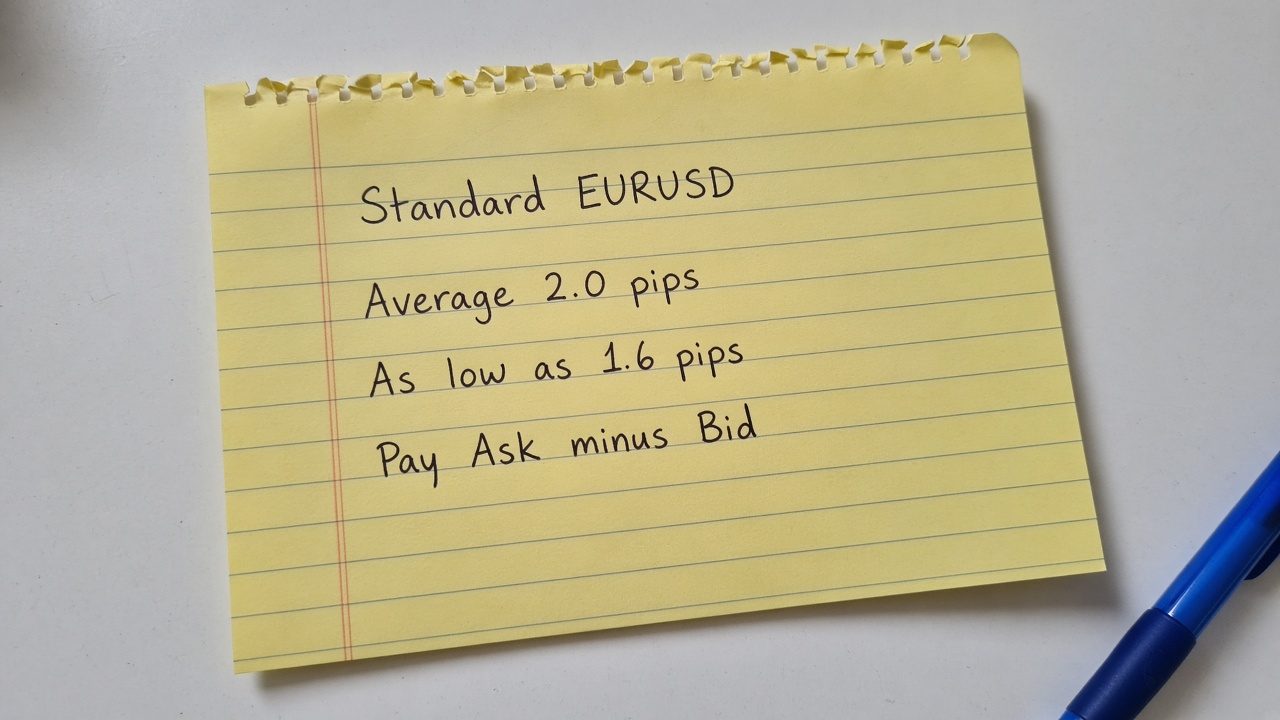
The forex trading page opened for this article carried a different footer: XM Global Limited, regulated by the Financial Services Commission of Belize under the Securities Industry Act 2021, licence 8557558. Its Standard table, for the top pairs shown without logging in, printed both an average and an "as low as" figure. On that view, Standard EURUSD showed an average of 2.0 pips and a low of 1.6 pips. Ultra Low Standard used a hash suffix, and EURUSD# showed an average of 1.1 pips and a low of 0.8 pips. Those rows also printed a leverage column, including 1000 on several pairs and 400 on USDCHF and EURCHF. That column is not the spread, and it is not a leverage cap you can copy onto a Cyprus retail account or onto the profile card.
Use the row the way a ticket works:
Write down the company in the footer of the page you opened. If it is not the company on your agreement, do not use that table.
Match the symbol exactly. EURUSD and EURUSD# were different rows, with different averages.
Read ask minus bid on that symbol at the moment you care about. The "as low as" cell is the floor the page is willing to advertise. The average cell is still not your fill.
Buy orders in the costs paper open at the ask and close at the bid, so a round turn on a buy pays the spread in that direction even when the market has not moved.
The same forex page also says you can see full trading hours after login, and only the top pairs are shown before registration. A pair that is missing from the public top ten still has its own spread inside the account.
Turn the pip gap into money
The costs paper's arithmetic for one standard lot of EURUSD is:
100,000 × 0.0001 × 1.6 = USD 16
Ask 1.30599 minus bid 1.30583 is 0.00016, which the paper calls 1.6 pips. The USD 16 figure uses a 100,000-unit contract and a USD account. The paper says the amount is in USD or the currency equivalent, so an account denominated in another currency will not show USD 16 for the same pip gap. The prices in the example are the paper's illustration. They are not today's EURUSD quote.
| Input from the costs paper | Figure | What it is |
|---|---|---|
| Ask | 1.30599 | Buy price in the example |
| Bid | 1.30583 | Sell price in the example |
| Spread | 1.6 pips | 0.00016 on EURUSD |
| One standard lot | USD 16 | 100,000 × 0.0001 × 1.6 |
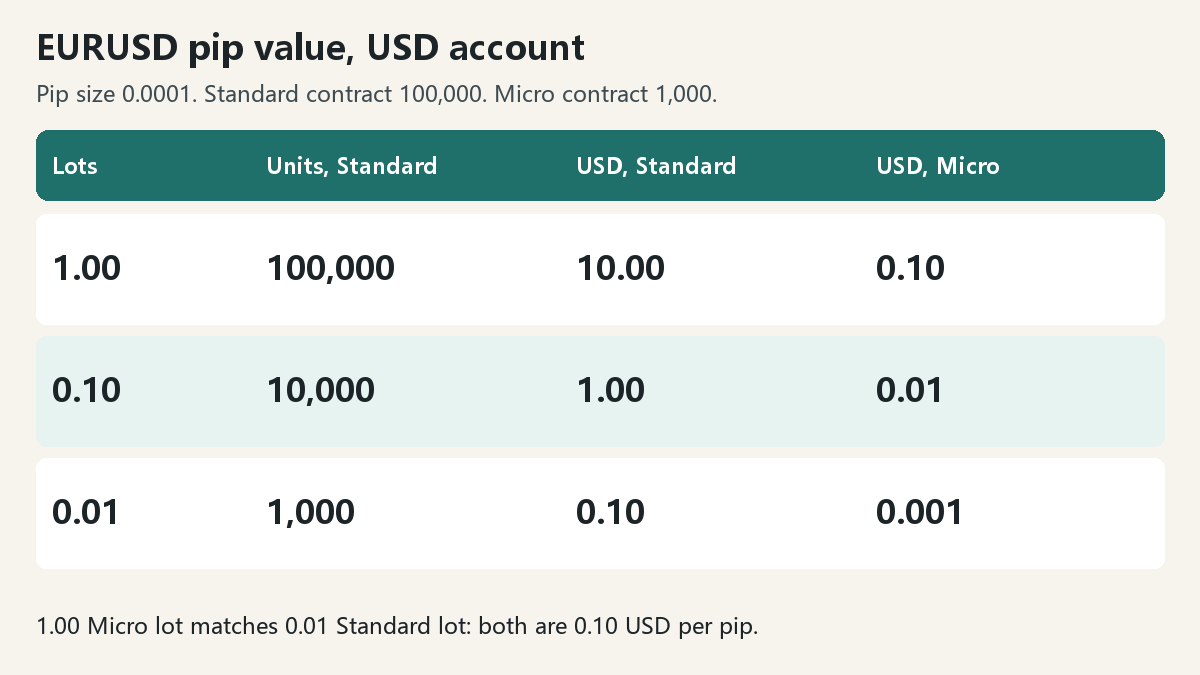
| 0.01 of that lot | USD 0.16 | Same pips on 1,000 units |
Apply the same formula to the average you actually saw, and label it as arithmetic, not a fill. On the Standard EURUSD row above, 2.0 pips on a 100,000-unit lot is 100,000 × 0.0001 × 2.0 = USD 20. That is USD 4 more than the 1.6 pip floor on the same contract size. If your contract is 1,000 units rather than 100,000, neither USD 16 nor USD 20 applies. Contract size is covered in what one standard lot means on XM. The pip calculator is only as good as the contract size and pair you type in.
A tighter row can still cost more
On the page opened here, Ultra Low Standard EURUSD# advertised a lower average than Standard EURUSD. That does not make Ultra Low the cheaper account until you know whether that book also charges commission, swap, or a different contract size. Account names, including Standard, Ultra Low, Zero, and Shares, are sorted in the account and rebate check. A Shares account is a stock account, so this forex spread sum does not describe it.
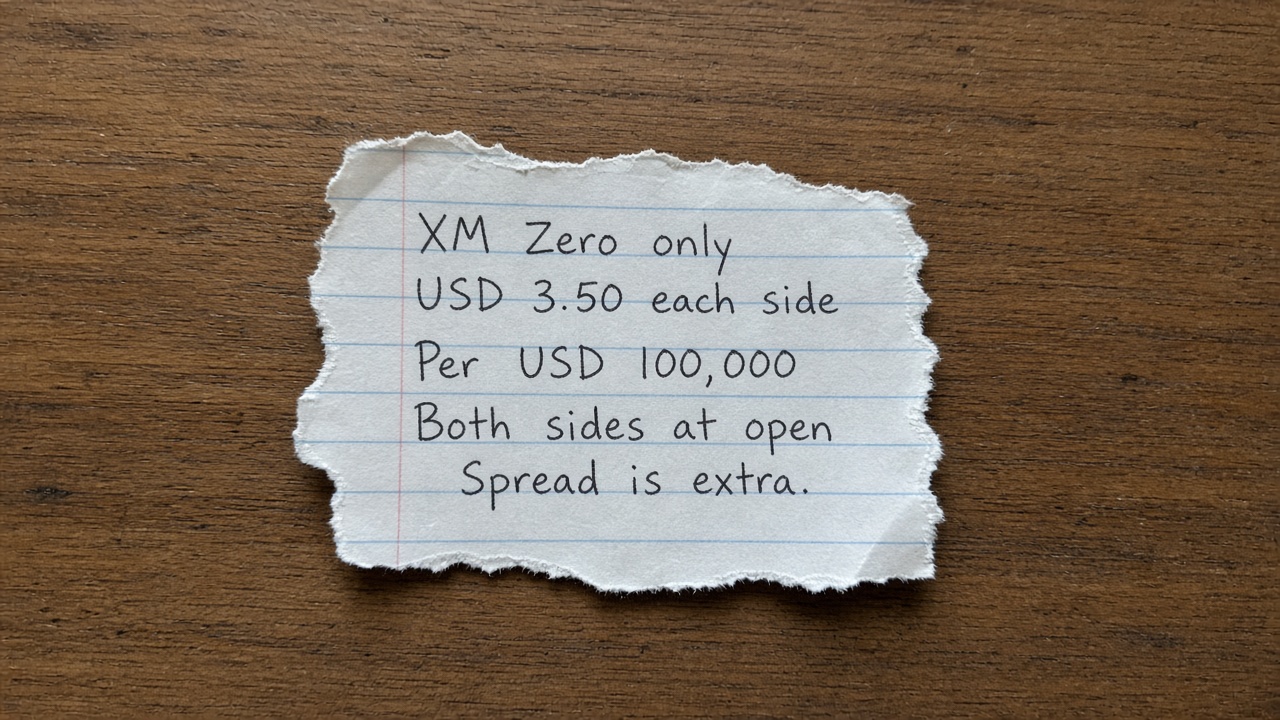
The Cyprus costs paper charges a commission on XM Zero accounts only, when a position is opened and when it is closed. It states the rate as USD 7 per USD 100,000 transaction, then shows the split: USD 3.50 on the open and USD 3.50 on the close, per USD 100,000 of transaction size. Both sides are deducted when the position is opened.
Buy 3 lots of USDJPY. Transaction size 300,000 USD. Commission: 2 × (3.50 × 300,000 / 100,000) = USD 21.
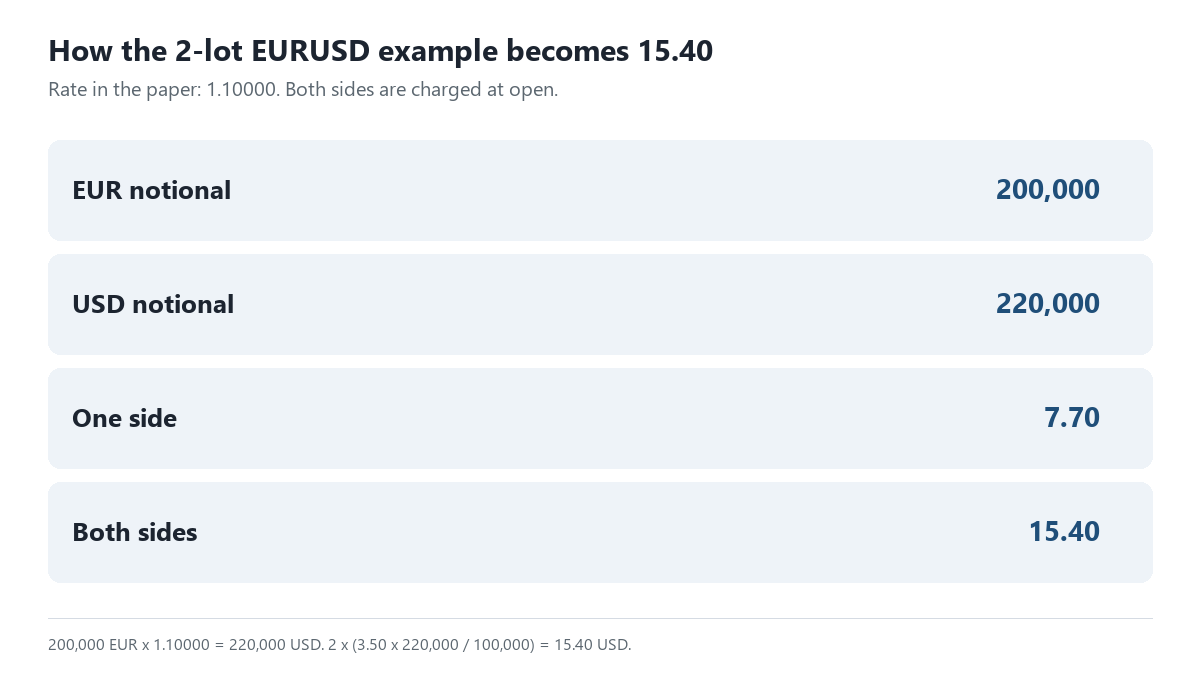
Buy 2 lots of EURUSD at the paper's rate of 1.10000. That is 200,000 EUR, or 220,000 USD. Commission: 2 × (3.50 × 220,000 / 100,000) = USD 15.40.
Those commission lines are not inside the 1.6 pip spread example. If your agreement does not offer Zero, do not add USD 3.50. If it does, add the commission the statement shows to the spread in cash. A 0.8 pip average that also carries commission can cost more than a 2.0 pip average with no commission, once both are in the same currency and on the same lot.
What the spread figure leaves out
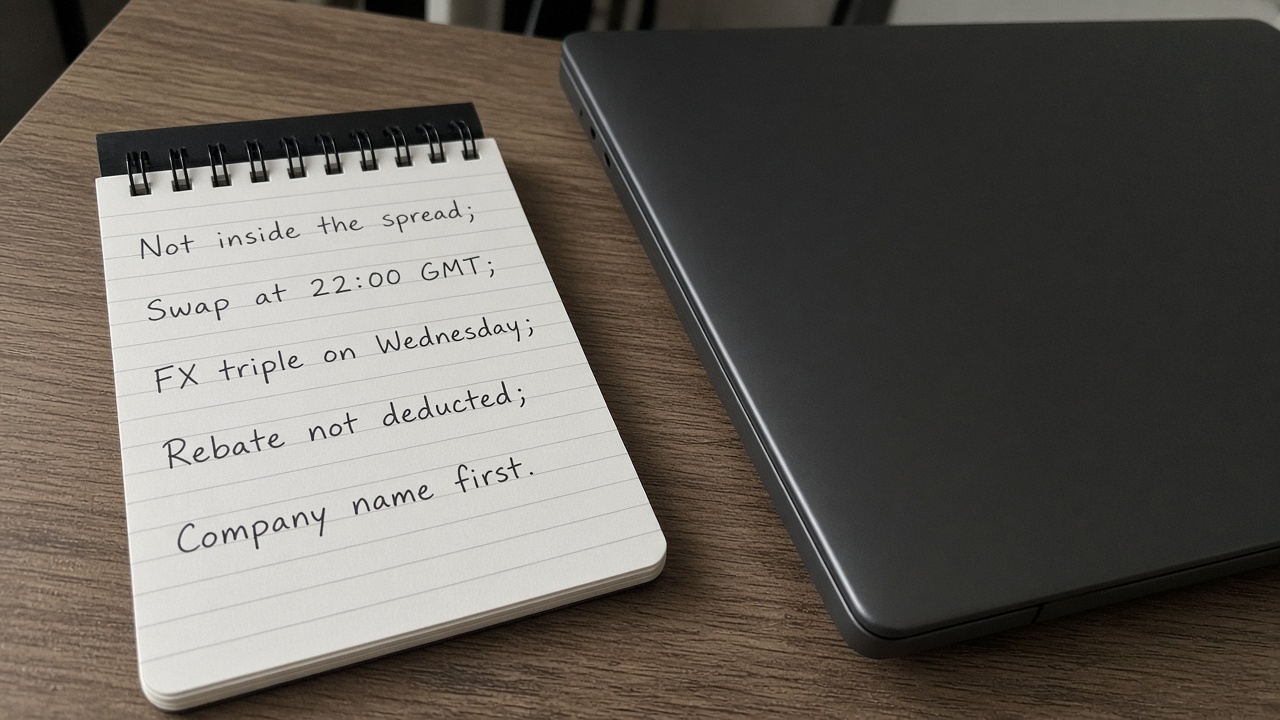
The costs paper treats overnight financing separately. Rollover is applied at 22:00 GMT. A position opened at 21:59 is included in that rollover. A position opened at 22:01 is not included until the next day. There is no Saturday or Sunday rollover while the market is closed, but the paper says banks still calculate interest over the weekend, so XM applies a three-day rollover on Wednesday for currency and precious-metal CFDs, and on Friday for cash index, cash energy, and stock CFDs. That charge can be a debit or a credit. It is not a pip you can read off the ask-bid gap.
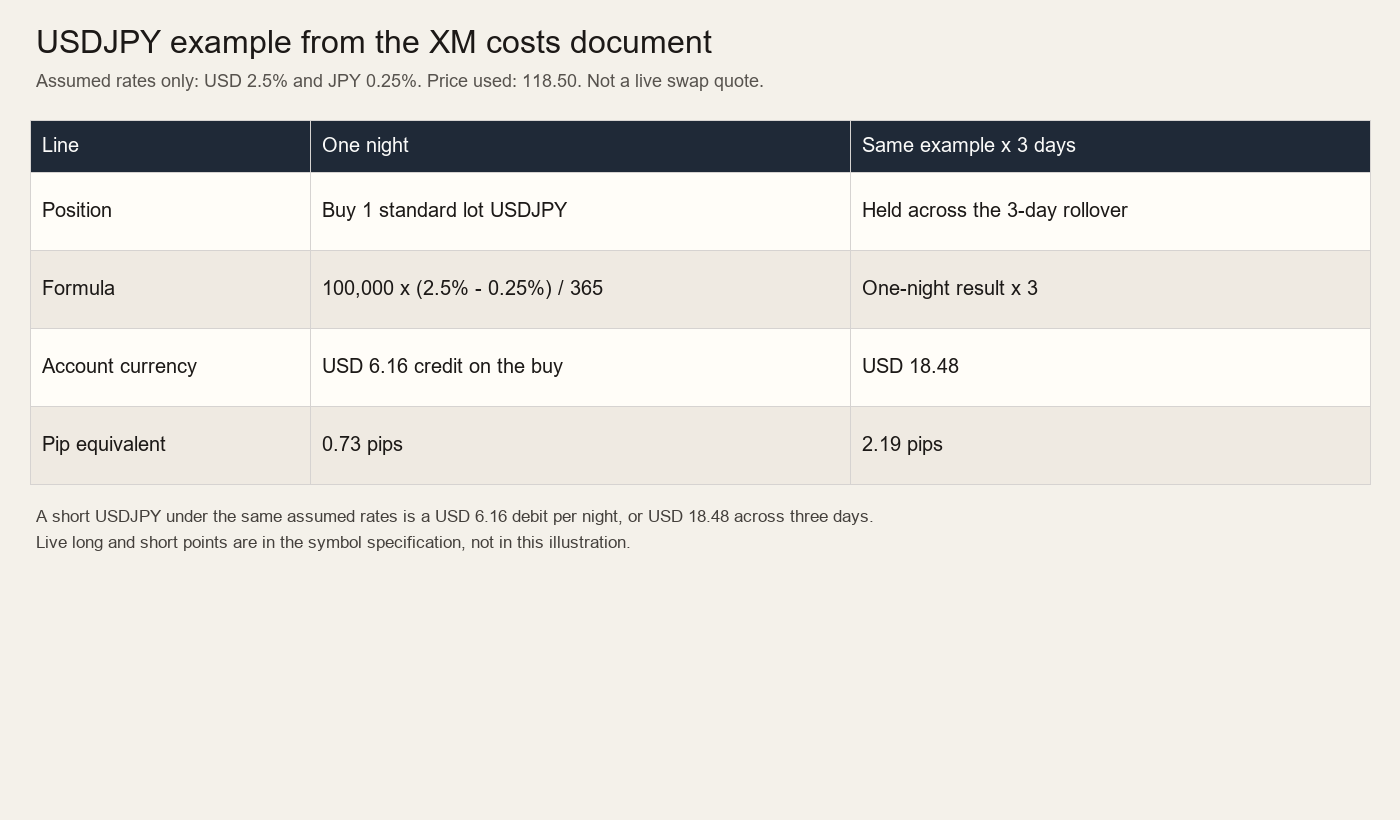
The paper's own swap illustration is also labelled as an assumption, not a live rate: a 1 lot long USDJPY at 118.50, with assumed interest of 2.5% and 0.25%, producing USD 6.16 a day in that story, or about 0.73 pips. Use the swap shown on your symbol. Do not reuse 118.50 or those interest rates.
A rebate is not subtracted from the spread until it is confirmed on the trades you actually closed. How to do that subtraction is in rebate per lot and net cost. A tighter spread does not make the broker safer, and a rebate does not turn the spread into profit.
The forex page also carries a line about no hidden fees. The costs paper still itemises spread, swap, and Zero commission. Read the itemised paper for the company on your agreement, not the slogan.
If you are researching from India
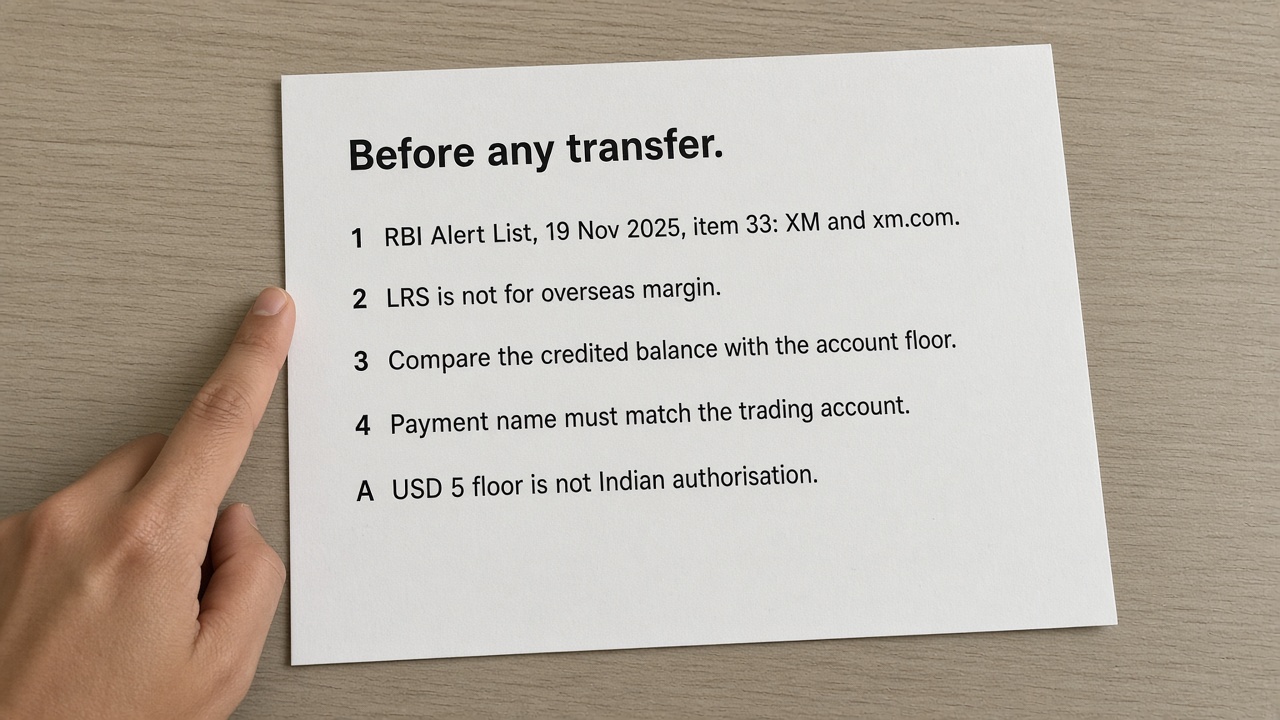
A spread table does not decide whether a resident of India may open, fund, or trade the account. That permission question is separate from pip arithmetic and is set out in how Indian residents should verify a platform before using XM. This article does not describe a way around those rules. If you are only studying the arithmetic, keep the example in the currency the paper uses and do not treat USD 16 as an INR debit.
Frequently asked questions
What is an XM spread?
It is the difference between the buy price and the sell price of the instrument, as the Cyprus costs paper defines it. On a buy, you open at the ask and close at the bid, so the gap is a cost even if the market price has not moved in your favour.
How do I check the real XM spread on a ticket?
Subtract bid from ask on the exact symbol, including any suffix such as the hash used on the Ultra Low rows. Then multiply the pips by the contract size. The average column and the "as low as" column are descriptions of a table, not the fill on your order.
Does 1.6 pips always cost USD 16?
Only in the paper's example: one standard lot, 100,000 units, EURUSD, pip size 0.0001. A 0.01 lot of that contract is USD 0.16 on the same formula. A different pair, a micro contract, or a non-USD account currency changes the cash amount.
Why did one EURUSD row show 2.0 and 1.6?
On the forex page opened for this article, Standard EURUSD listed an average of 2.0 pips and a low of 1.6 pips. The low is the advertised floor. The average was already wider. Both numbers can change, and they belonged to the company in that page's footer.
Is Ultra Low always cheaper because the average is tighter?
No. On that page EURUSD# showed a lower average than EURUSD, but the symbol, the book, and any commission still have to match. Compare cash cost on the same session and the same lot, not the smallest number in the table.
Which accounts pay the USD 3.50 commission?
The costs paper limits that commission to XM Zero. It is USD 3.50 per side for each USD 100,000 of transaction size, and both sides are taken when the trade opens. Spread-only accounts in that paper do not use this line. If your entity has no Zero account, do not add it.
Is overnight swap part of the spread?
No. The paper applies rollover at 22:00 GMT. A trade opened at 21:59 is included that night. One opened at 22:01 waits until the next day. Wednesday carries three days for currency and precious-metal CFDs. Friday carries three days for cash indices, cash energies, and stocks.
Should I subtract cashback from the spread before I trade?
Not as a forecast on the ticket. Subtract only a rebate that the programme has confirmed on the closed trades. Until then, the spread, any Zero commission, and any swap are still costs. A rebate does not change the price you were filled at.
Can I copy the leverage printed next to the spread?
No. The table opened here printed leverage beside the spread, including 1000 on several pairs. That number is not the pip cost, and it is not the cap on every XM company. Read the leverage on your own agreement.
Do two XM websites share one spread?
No. The costs paper names Trading Point in Cyprus. The forex page opened here named XM Global Limited in Belize, licence 8557558. Use the table that belongs to the company on your agreement. A profile card that lists several licences is not a substitute for that match.
Does a low spread mean the account is allowed in India?
No. Pip arithmetic and permission are different questions. Residents should use the India verification guide before treating any of these prices as an account they can open or fund. This article does not offer a workaround.
Why can the spread jump during news?
The costs paper says spreads are variable and can widen when liquidity thins: news, political uncertainty, a volatile move, the end of the business day, or the weekend. The average on a marketing table is not a ceiling.
Where are trading hours for a pair?
The forex page says trading hours for the full list are visible after you log in. The public top-ten table does not replace that list. A pair you cannot see yet still needs its own ask, bid, and session before you treat a headline pip figure as the cost.
Does "no hidden fees" on the forex page cancel the costs paper?
No. The page opened here includes that line, and the Cyprus paper still lists spread, swap, and a Zero commission. Use the itemised charges for the company you contracted with. The slogan is not a quote.