Forex cashback, also called a forex rebate, is a conditional return of part of the revenue or commission generated by eligible trading activity. It is normally calculated from verified volume and paid by a broker or introducing partner after the trade. Cashback can reduce net trading cost, but it is not trading profit, does not erase losses and does not make an unsuitable or unauthorised account acceptable.
The useful question is not simply “How large is the rebate?” It is “What did the trade cost before the rebate, which activity qualifies, and how much was actually credited?” A large advertised rate can still be poor value if the account has wider spreads, higher commission, restrictive eligibility or unreliable payment.

What Is Forex Cashback—and What Is It Not?
In many partner arrangements, a broker pays an introducing broker (IB) or affiliate for eligible client activity. The partner may return an agreed portion to the trader. Some brokers also administer rebates directly. The contract controls the source, amount, timing and eligibility; there is no single industry-wide cashback formula.
The XM Campaign-Rebates terms provide one concrete example. They say an introducer may share part of the commission generated under its agreement with XM Global, and that the amount can depend on the instrument and programme specifications. Those terms illustrate a broker–introducer model; they should not be treated as the rules for every broker or provider.
Cashback is best treated as a post-trade cost adjustment. It is not:
a return generated by market price movement;
interest on the trading balance;
a guarantee that a losing trade will become profitable;
the same as non-withdrawable bonus credit;
proof that the broker, account or transaction is authorised in the trader’s country;
a reason to increase trade frequency or position size.
A rebate may be generated whether an eligible trade wins or loses because the calculation can depend on volume rather than outcome. The losing trade still loses. Only a small, separate credit may offset part of its costs.
How Forex Cashback Works
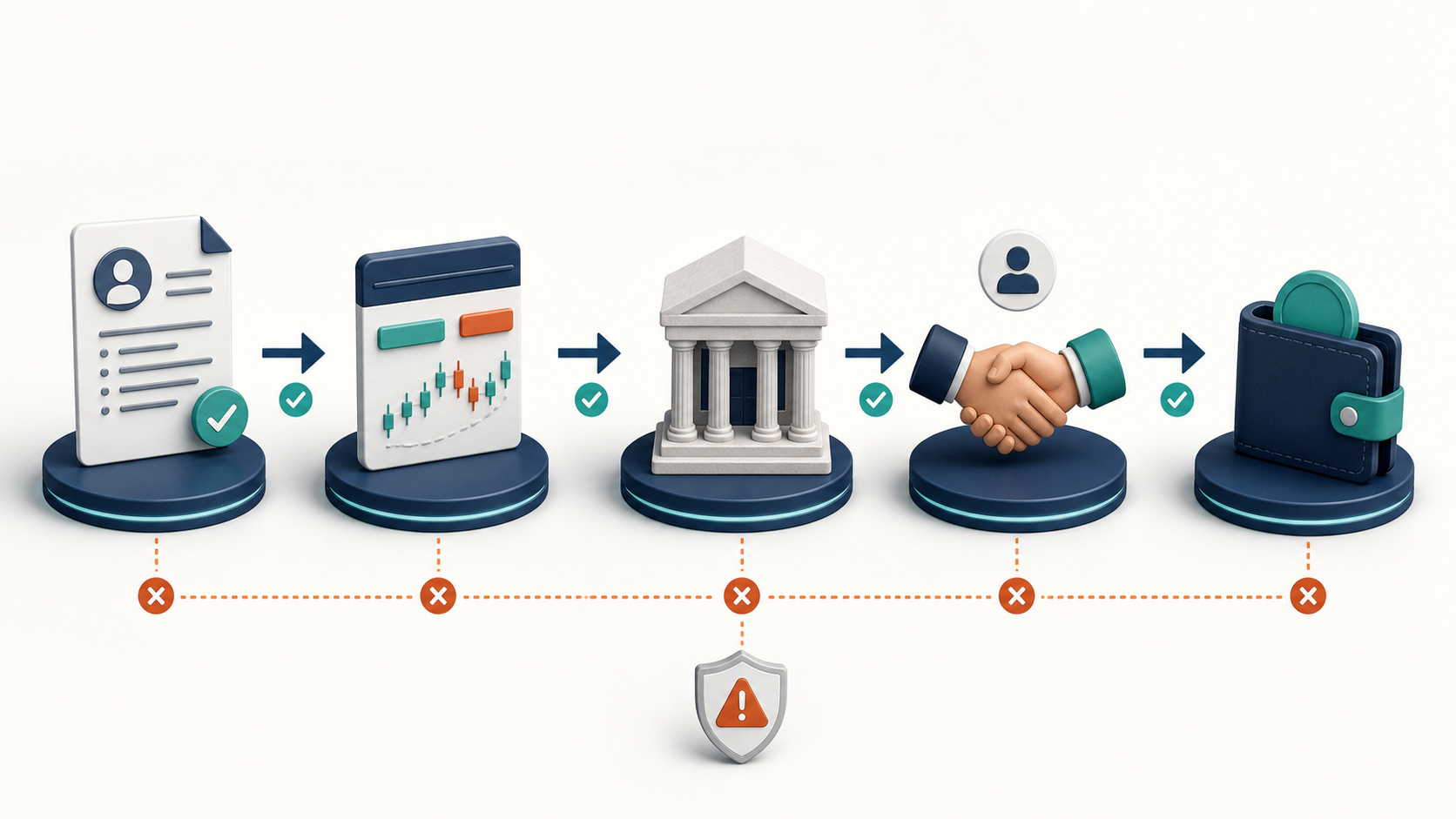
A typical partner rebate has five stages. Each stage can fail if the account or trade does not meet the programme terms.
Account attribution: the broker records that an eligible account was opened, linked or transferred through the relevant partner or campaign.
Eligible trading activity: the trader closes or completes activity that meets the programme’s instrument, account, volume, duration and conduct rules.
Broker confirmation: the broker reports or validates the qualifying volume and any resulting partner commission.
Rebate calculation: the programme applies its per-lot, pip-based, percentage or other formula, including any exclusions and rounding.
Credit or payout: the approved amount is posted to a broker wallet, trading account or partner balance, or paid through an available withdrawal method.
“Automatic” usually means the calculation happens after account attribution and broker reporting. It does not mean every trade automatically qualifies, the rate can never change, or payment is guaranteed before reconciliation.
Where Does the Rebate Money Come From?
The money usually comes from the commercial arrangement between a broker and a partner, or from a broker’s own retention programme. It is not created by the trader’s profit. In a partner model, the broker recognises eligible client activity, pays or records partner commission, and the partner shares an agreed amount back with the trader.
This creates a conflict worth seeing clearly. A partner may earn more when referred clients trade more. The CFTC retail-forex advisory warns that affiliates and salespeople can have financial relationships that are not obvious to customers. A transparent provider should disclose that relationship, explain whether it can alter the account’s pricing, and avoid encouraging unnecessary turnover.
The right question is not “Does the partner earn commission?”—that is often the economic basis of the programme. Ask whether the arrangement is disclosed, the rate is documented, the account conditions are competitive and the trader remains free to trade less or not at all.
How Forex Rebates Are Calculated
Providers can quote the same economic idea in different units. Do not compare two headline rates until their bases are aligned.
| Rebate model | Basic calculation | Details needed before comparison |
|---|---|---|
| Fixed cash per lot | Eligible lots × cash rate | Instrument, contract size, account type, currency, per-side or round-turn basis |
| Pips per lot | Eligible lots × pip rebate × pip value | Pair, pip convention, lot size, account currency and conversion rate |
| Percentage of spread or commission | Eligible cost base × rebate percentage | Which cost is included, broker-recorded amount, caps and exclusions |
| Share of partner commission | Eligible partner commission × shared percentage | Commission schedule, tiers, adjustments and reporting basis |
“Per lot” needs a definition
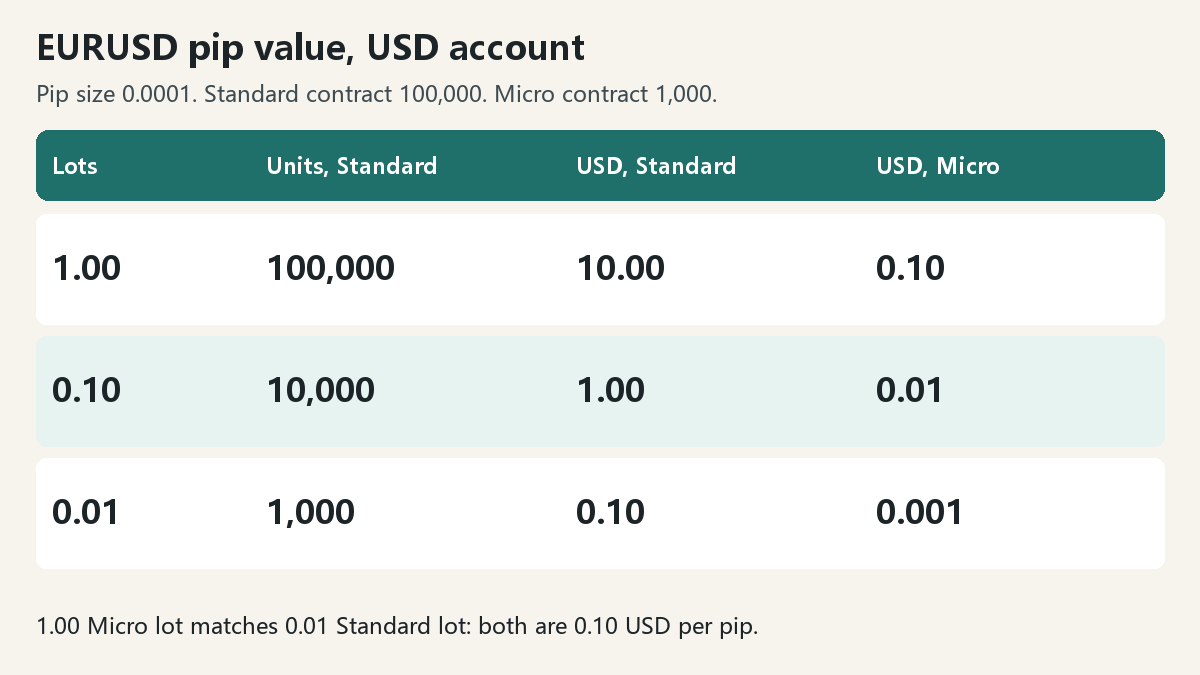
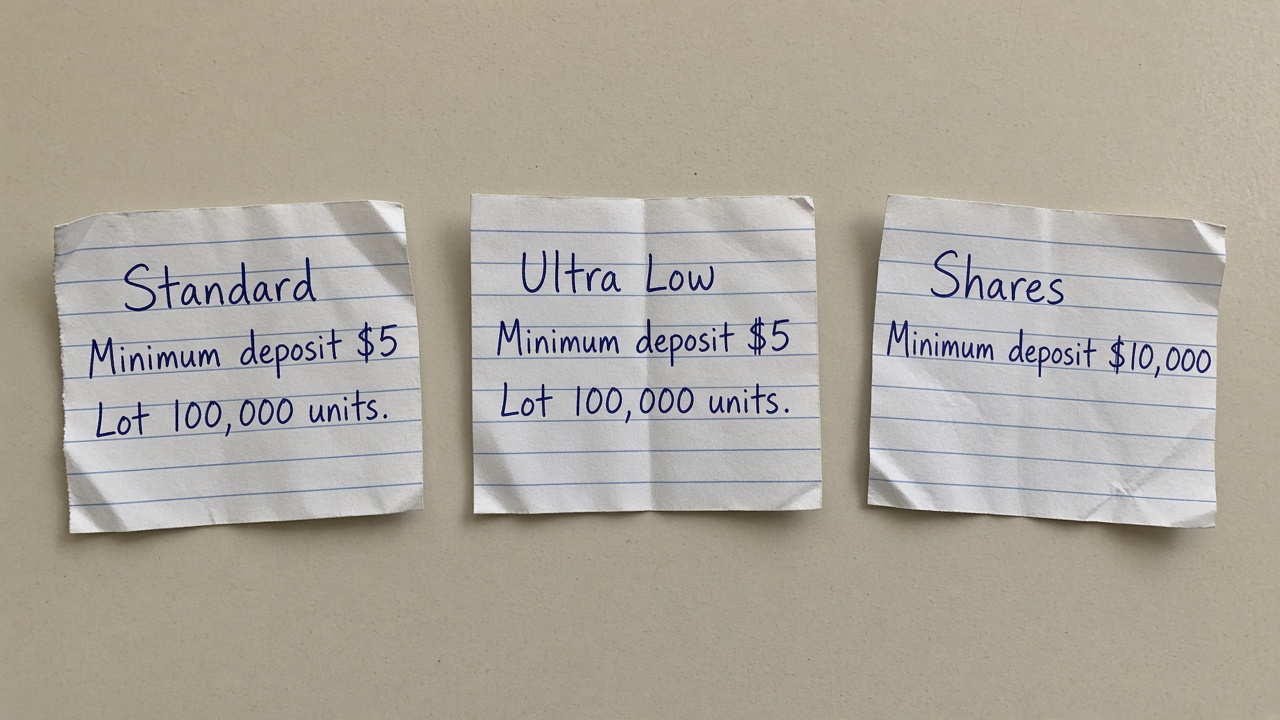
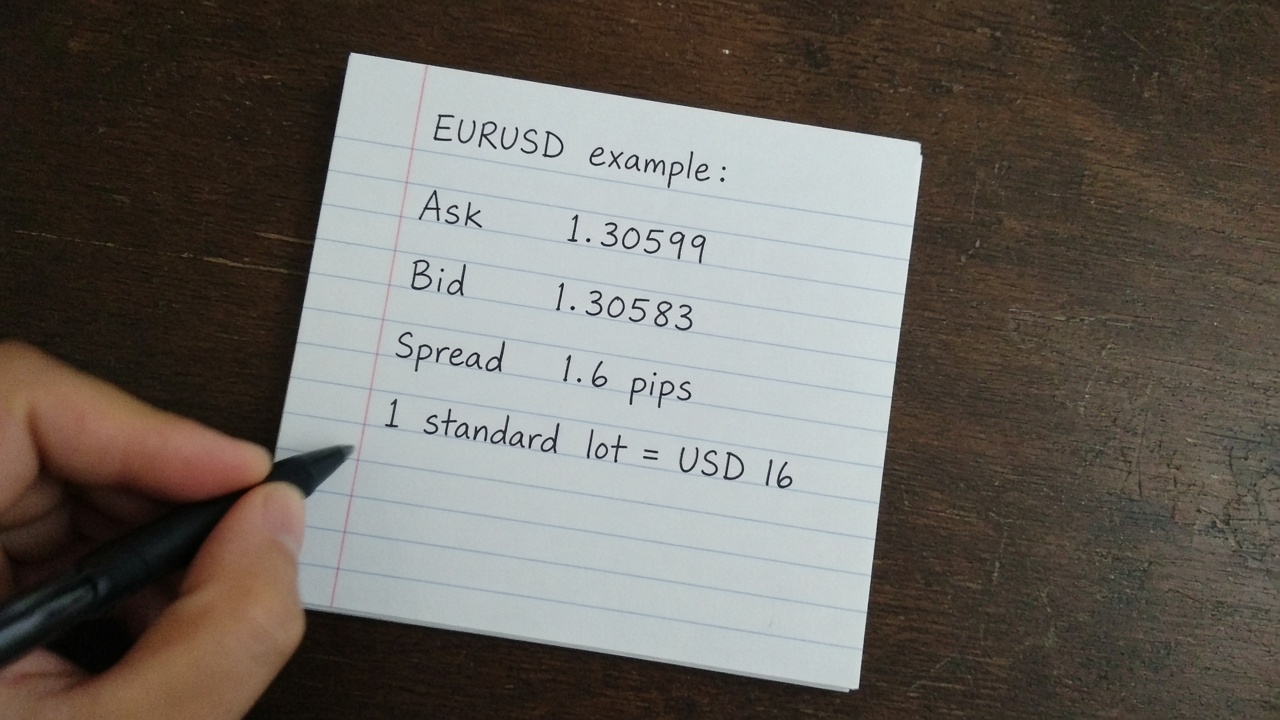
A standard lot is often 100,000 units for major currency pairs, but contract size can differ by instrument and account. Gold, indices, cryptocurrencies, micro accounts and cent accounts do not necessarily use the same economics as a standard FX lot.
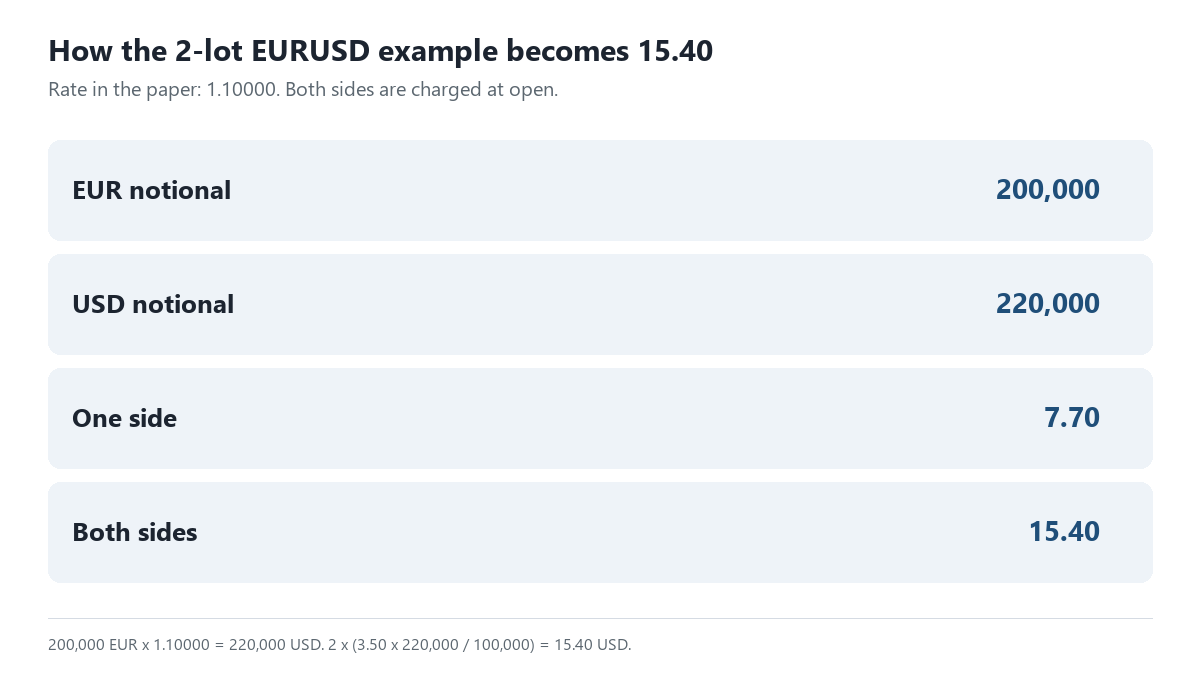
The quote must also say whether it applies per side or per round turn. A per-side amount can be credited when a position opens and again when it closes; a round-turn amount covers the completed open-and-close cycle. Comparing one with the other without adjustment can make a rate appear twice as large.
Illustrative fixed-rate example
Assume a programme pays an illustrative USD 3 per eligible standard round-turn lot. If the broker confirms 2.5 eligible lots:
Estimated rebate = 2.5 × USD 3 = USD 7.50
This is not a live rate or expected return. The payable amount may change with the instrument, contract size, account, currency conversion, exclusions, rounding or revised programme terms.
Illustrative pip-based example
For a standard lot of a major pair quoted in USD, one pip is commonly USD 10. If a documented programme pays 0.2 pip per eligible standard round-turn lot and the trader completes 3 eligible lots:
Estimated rebate = 3 × 0.2 × USD 10 = USD 6
The USD 10 pip value cannot be copied to every pair or account currency. Cross rates, JPY pairs, non-standard contracts and account-currency conversion change the calculation.
How Cashback Affects Total Trading Cost
The bid–ask spread is an inherent transaction cost. Investor.gov’s forex bulletin also notes that a dealer may charge a separate commission, build compensation into a wider spread, or use both. A complete comparison should include other costs that apply to the trade.
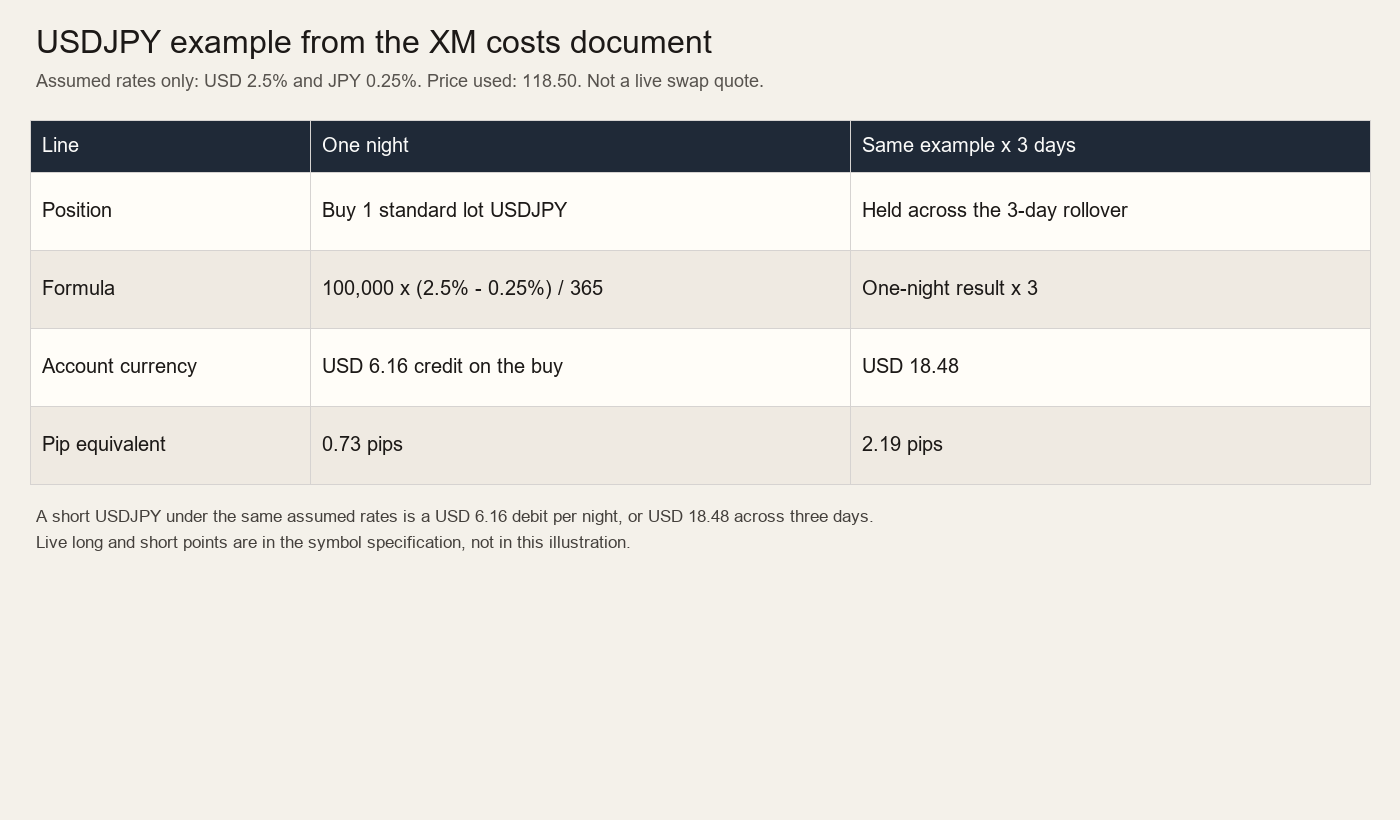
Gross trading cost = spread cost + commission + financing/swap + conversion charges + adverse slippage + other applicable fees
Net cash cost after rebate = gross trading cost − confirmed withdrawable rebate
Keep “confirmed” and “withdrawable” in that formula. A projected dashboard figure, non-withdrawable credit or disputed amount is not the same as cash received.

Worked net-cost example
Suppose two eligible standard round-turn lots produce these illustrative costs:
spread cost: USD 18;
commission: USD 14;
overnight financing: USD 5;
adverse slippage: USD 3;
fixed rebate: USD 3 per eligible round-turn lot.
Gross cost is USD 40. The estimated rebate is 2 × USD 3, or USD 6. If the full amount is confirmed and withdrawable, the net cash cost is USD 34.
The rebate lowered cost by USD 6; it did not make trading free. It also did not change the market result. If the position lost USD 100 before costs, the rebate would not convert that loss into a gain.
Is a Higher Rebate Always Better?
No. Compare net cost under equivalent market conditions, instruments, account sizes and execution assumptions.
| Illustrative offer | Gross round-turn cost | Rebate | Net cash cost |
|---|---|---|---|
| Offer A | USD 8.00 | USD 1.50 | USD 6.50 |
| Offer B | USD 11.00 | USD 3.00 | USD 8.00 |
Offer B advertises twice the rebate but still costs USD 1.50 more after cashback. Real spreads are often variable, so one snapshot cannot prove long-term cost. Compare like-for-like observations over relevant sessions and instruments, then add commission, financing and execution quality.
A rebate can genuinely reduce cost when the linked account retains competitive trading conditions, eligible volume is counted correctly, and payment is reliable. It is poor value when the headline credit distracts from a wider spread, higher commission, slower execution, restrictive terms or a weaker regulatory position.
Forex Cashback Versus a Bonus or Discount
| Benefit | What triggers it | When value is recognised | Main question |
|---|---|---|---|
| Forex cashback/rebate | Eligible trading activity | After calculation and confirmation | Is it withdrawable, and what cost does it offset? |
| Deposit bonus | A qualifying deposit or promotion | Often as trading credit | Can it be withdrawn, and what cancels it? |
| Upfront fee discount | Reduced published fee or commission | At the transaction | Is another cost higher? |
| Trading profit or loss | Market movement and position outcome | When marked or realised | What risk was taken to produce it? |
Calling all four “cashback” obscures their conditions. A non-withdrawable bonus should not be valued as cash. A discount already reflected in the commission should not be subtracted again. A rebate is not profit simply because it arrives after a winning trade.
How to Compare Forex Cashback Programmes
Use a normalised checklist rather than sorting a broker table by the largest number.
Start with the underlying account. Record typical spread, commission, financing, contract size, execution model and available instruments without the rebate.
Define the rate unit. Confirm cash, pips or percentage; per side or round turn; standard, mini, micro or instrument-specific lot.
Check attribution. Ask whether a new account is required, whether an existing account can be linked, and how confirmation is documented.
Read eligibility rules. Look for excluded accounts, instruments, countries, trade durations, hedged positions, copied trades, internal transfers and abusive-activity clauses.
Inspect settlement. Identify the reporting delay, payout cycle, minimum threshold, currency, conversion method, withdrawal channel and fees.
Verify the provider. Confirm its legal identity, disclosure of broker/affiliate relationships, privacy policy, support route and dispute process.
Check regulation separately. Cashback eligibility does not prove the broker or platform is authorised for the intended activity in the reader’s country.
Calculate net cost. Use confirmed trading history and current terms, not a promotional maximum.
The site’s Forex Rebate Calculator can organise a fixed-rate estimate. Enter only a rate supported by the programme’s current terms, and treat the result as an estimate rather than a payout promise.
Why Cashback May Not Arrive
Missing rebates usually trace back to attribution, eligibility, reporting or payment—not the arithmetic alone.
The account was opened without the required partner link or was not successfully transferred.
The legal entity, country, account type or instrument is excluded.
The programme counts only closed or round-turn volume.
Trades were too short, offset, cancelled or otherwise excluded by the terms.
The broker has not completed its reporting or reconciliation cycle.
Volume was recorded in a different contract-size convention.
The balance has not reached the payout minimum.
Currency conversion or rounding created a smaller amount than expected.
The broker or partner reversed commission after a chargeback, prohibited activity or account review.
When reporting a discrepancy, provide the account identifier, programme name, trade tickets, open and close times, instrument, volume, rate expected and settlement period. Do not send passwords, one-time codes or full payment-card data.
Risks Cashback Does Not Reduce
Cashback reduces only an eligible cost component. It does not reduce price risk, leverage, margin-call risk, counterparty failure, platform outages, slippage, financing charges or legal/regulatory exposure.
The most dangerous behavioural mistake is rebate chasing: trading more, using larger positions or opening low-quality trades mainly to generate volume. If an extra trade has USD 12 of total cost and earns USD 3 cashback, it still adds USD 9 of net cost before the market result. Higher turnover also increases exposure to execution errors and losses.
Use position sizing and a trading plan independently of the rebate. The site’s Position Size Calculator can help structure a risk estimate, but no calculator can make leveraged trading safe.
Forex Cashback and Indian Residents
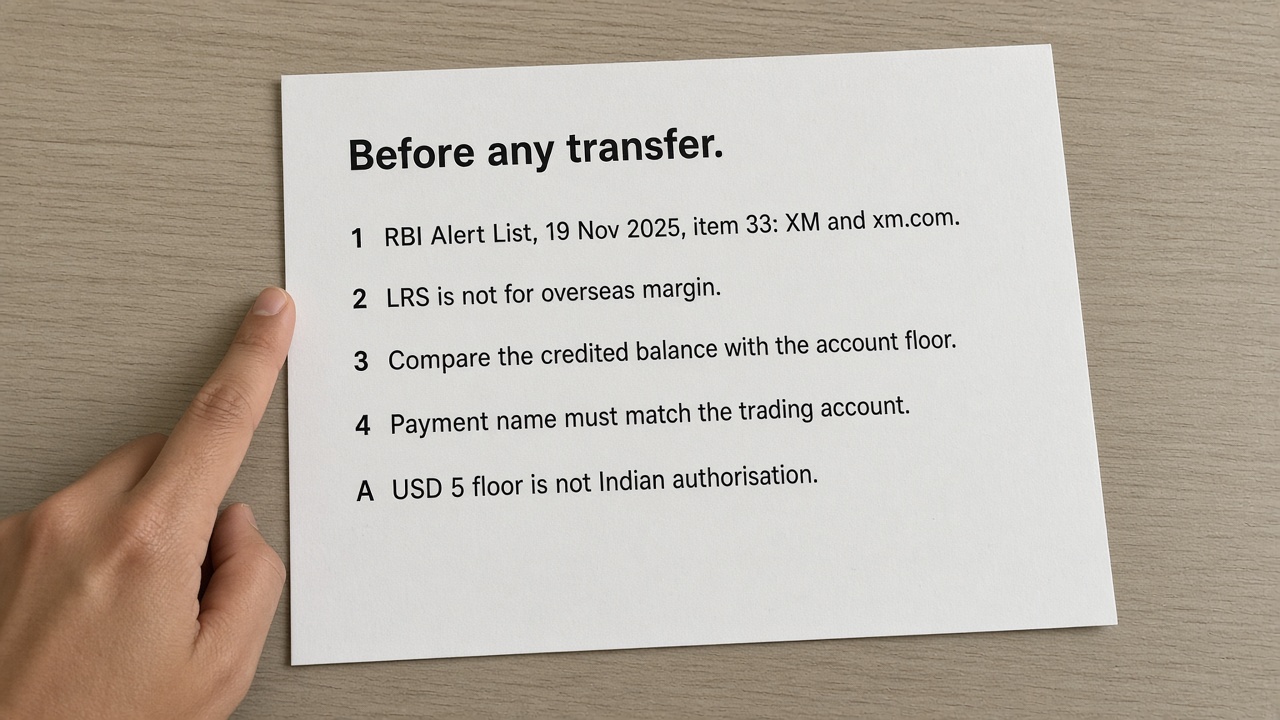
For residents of India, programme eligibility and local permission are separate questions. The RBI Foreign Exchange Transactions FAQ says resident persons may undertake forex transactions only with authorised persons and for permitted purposes under FEMA. Permitted electronic forex transactions should take place on RBI-authorised electronic trading platforms or recognised exchanges—NSE, BSE and MSE.
RBI also says its Alert List is not exhaustive: absence from the list is not proof of authorisation. Its FAQ states that LRS cannot be used to remit margin or margin calls to overseas exchanges or overseas counterparties for online forex trading.
SEBI has separately cautioned Indian investors about foreign trading portals offering overseas products, high leverage, low brokerage and incentives. Depending on the arrangement, Indian exchange investor-protection and dispute-resolution mechanisms may not be available.
Therefore, a rebate offer, INR payment option, local-language support or accessible app does not establish that the underlying forex activity is permitted. Check the exact legal entity, RBI authorisation status, platform, product and funding route before opening or linking an account. Obtain India-qualified advice for a specific situation.
A Practical Way to Use Cashback Information
Treat the rebate as the last line of a cost review, not the first reason to choose a broker.
Choose only among accounts and venues that meet your regulatory, product and counterparty requirements.
Compare trading conditions before cashback.
Normalise the rebate unit and eligibility terms.
Estimate net cost using realistic volume, not a volume target.
Verify the first credited amount against broker-confirmed trades.
Stop and investigate if the provider pressures you to trade more, deposit quickly or pay extra to release a withdrawal.
Readers researching a brand-specific arrangement can continue to the XM Cashback India guide. For broader exploration, use the broker information hub and trading tools without treating either as regulatory approval or personalised advice.
Frequently Asked Questions
What is forex cashback in simple terms?
Forex cashback is a conditional payment that returns part of the revenue or commission associated with eligible trading activity. It is usually calculated after a broker confirms volume. The credit can reduce net trading cost but is not market profit, does not remove losses and may be subject to account, instrument, country and payout rules.
Is forex cashback the same as a forex rebate?
Usually, yes. Providers commonly use “cashback” and “rebate” for the same cost-return arrangement. The label is less important than the contract: check the funding source, calculation basis, eligibility, payment route and whether the balance is withdrawable.
Do I receive cashback on losing trades?
Some programmes calculate rebates from eligible volume rather than trade outcome, so a losing trade may still generate a rebate. That is not universal. Even when paid, the rebate offsets only a small part of cost and loss; it does not make the trade profitable.
How much forex cashback can I earn per lot?
There is no universal rate. It can vary by broker, partner, legal entity, account, instrument, contract size, country and promotion. Confirm whether a quote is per side or round turn and whether “lot” has the same contract size across the offers being compared.
Does forex cashback reduce the spread?
Not necessarily. A later cash rebate can reduce net cost without changing the spread shown at execution. Some arrangements may affect account pricing. Compare the linked account’s actual spread and commission with the broker’s equivalent non-rebate account before concluding that cost is lower.
Is forex cashback free money?
No. It is connected to eligible trading activity and usually derives from broker or partner economics. Trading creates costs and risk. Increasing volume merely to collect rebates can add more net cost and loss exposure than the cashback returns.
Is a higher cashback rate always better?
No. A higher rate can accompany a wider spread, higher commission, restricted instruments, slower payment or weaker account conditions. Compare total net cost and execution quality under equivalent assumptions.
Can an existing broker account receive cashback?
Sometimes, but not always. A programme may require a new account, permit an internal partner transfer, or exclude previously registered clients. Obtain written confirmation of attribution before assuming future trades will qualify.
How often are forex rebates paid?
Payment can be daily, weekly, monthly or tied to broker reconciliation. A displayed amount may also need to reach a minimum before withdrawal. The programme terms should identify the cycle, currency, payment method and adjustment rights.
Why is my forex cashback missing?
Common causes include failed account attribution, an excluded instrument or account, incomplete trades, broker reporting delay, minimum thresholds, rounding, currency conversion or a reversal under the conduct rules. Reconcile trade tickets and programme terms before escalating.
Is forex cashback taxable in India?
Tax treatment can depend on the recipient’s status, the nature of the payment, books and wider trading activity. This article does not provide tax advice. Keep broker and payout records and ask an India-qualified tax professional how the payment should be reported in your circumstances.
Is forex cashback legal in India?
Cashback cannot be assessed separately from the underlying broker, platform, forex transaction and payment route. RBI requires resident persons to use authorised persons for permitted purposes and specified authorised venues for electronic transactions. Verify the complete arrangement through official sources and seek qualified advice where needed.
Sources and Editorial Note
Editorial and risk disclosure: This article uses public research and illustrative calculations. It does not verify a live rebate rate, recommend a broker or provide legal, tax or investment advice. xmforexcashback.in describes its editorial approach here; any affiliate relationship should also be disclosed at the point of an offer. Forex and leveraged products can cause substantial losses, and rebates do not protect capital.